

Planning an Istanbul Airport departure in 2026? The most important thing to know is this: arrive 3 hours before an international flight and 2 hours before a domestic one. Those are the standard recommendations, and they exist for good reason. Istanbul Airport (IST) is one of the world’s busiest aviation hubs and the main home base for Turkish Airlines, and its departure process has a rhythm all its own. Unlike many airports that split terminals by airline or destination, IST operates from a single, enormous terminal building. That means every departure — domestic or international — starts in the same main hall, but the steps you go through after that depend on your flight type. Understanding those steps in advance is the difference between a relaxed coffee before boarding and a sprint through a massive terminal. recommended Istanbul Airport (IST) Complete Guide 2026: Term This guide walks you through the full Istanbul Airport departures process for 2026, from arriving at the terminal to finding your gate, with practical advice for different types of travelers.
Quick Answer: For international departures from Istanbul Airport, plan to arrive 3 hours before your scheduled flight. For domestic flights, 2 hours is generally sufficient. These recommendations give you enough time for check-in, security, and passport control.
Key Takeaways
- Arrive 3 hours before international flights and 2 hours before domestic flights to account for check-in, security, and passport control.
- Istanbul Airport departures all begin in a single main terminal, but the process differs for domestic, international, and connecting passengers.
- Security screening and passport control are separate steps at IST; you pass through security first, then immigration.
- Mobile boarding passes are widely accepted at Istanbul Airport, but always have a printed backup for international travel.
- If you’re connecting through IST, you must pass through a separate transfer security screening before reaching your next gate.
How Istanbul Airport departures work in 2026
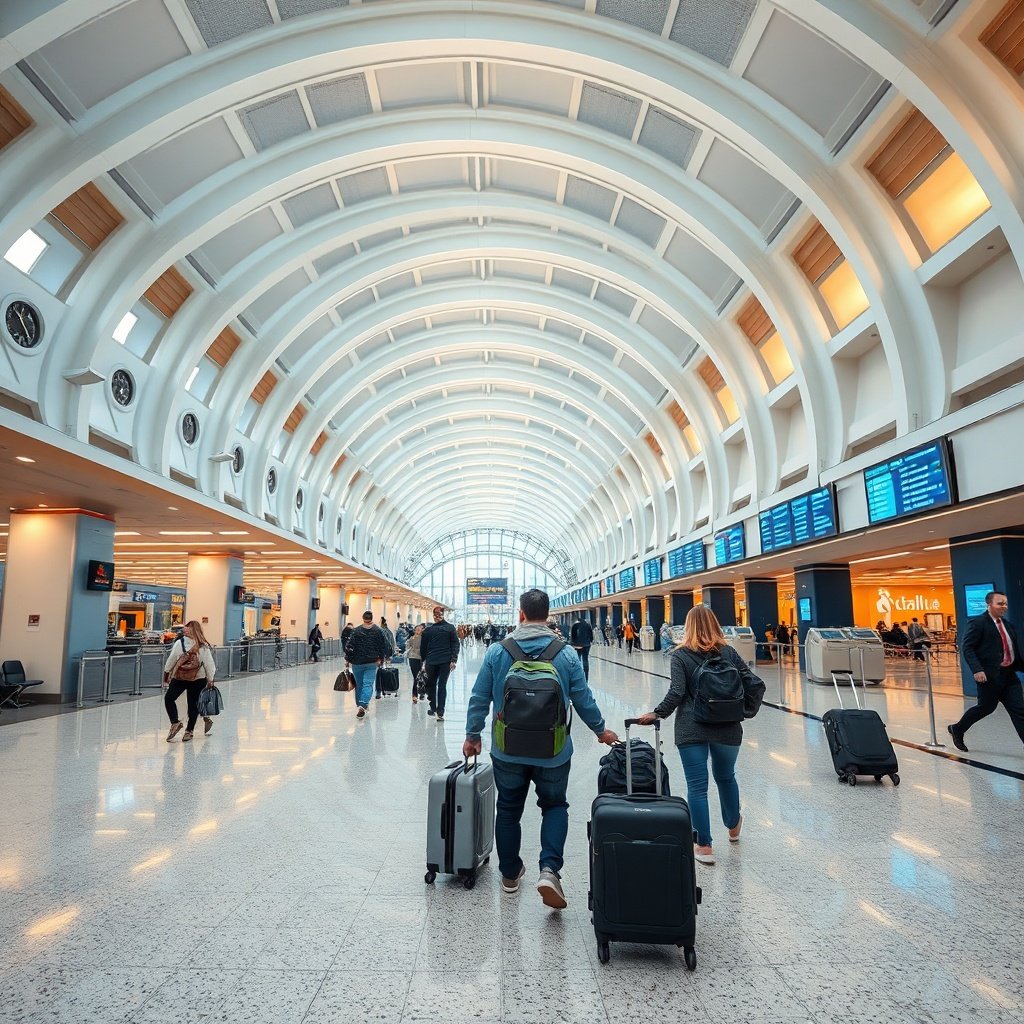
A spacious, well-lit terminal interior that guides passengers smoothly through the initial stages of their journey.
Step 1: Arrival and terminal access
Istanbul Airport’s departures are all handled from one main terminal building, which is among the largest airport terminals in the world by floor area. When you arrive by car, taxi, or metro, you’ll enter the departures level, where the check-in counters, security checkpoints, and passport control are all located. If you’re looking for an Istanbul Airport terminal map, the key thing to understand is the vertical layout: the departures hall is on the upper level, and arrivals are handled on the lower level. The main departures hall is where you’ll check in, but the airside departure area — where the gates are — is only accessible after you pass through security and passport control. For connecting passengers, there’s a separate transfer hall located airside. If you arrive on an international flight and are continuing to another international destination, you generally don’t need to pass through passport control at all. Instead, you’ll go through a dedicated transfer security screening and then head directly to your next gate.
Definition: Airside refers to the secure area of an airport beyond passport control and security screening, where departure gates, duty-free shops, and lounges are located. Landside is the public area before security, where check-in counters and arrivals are.
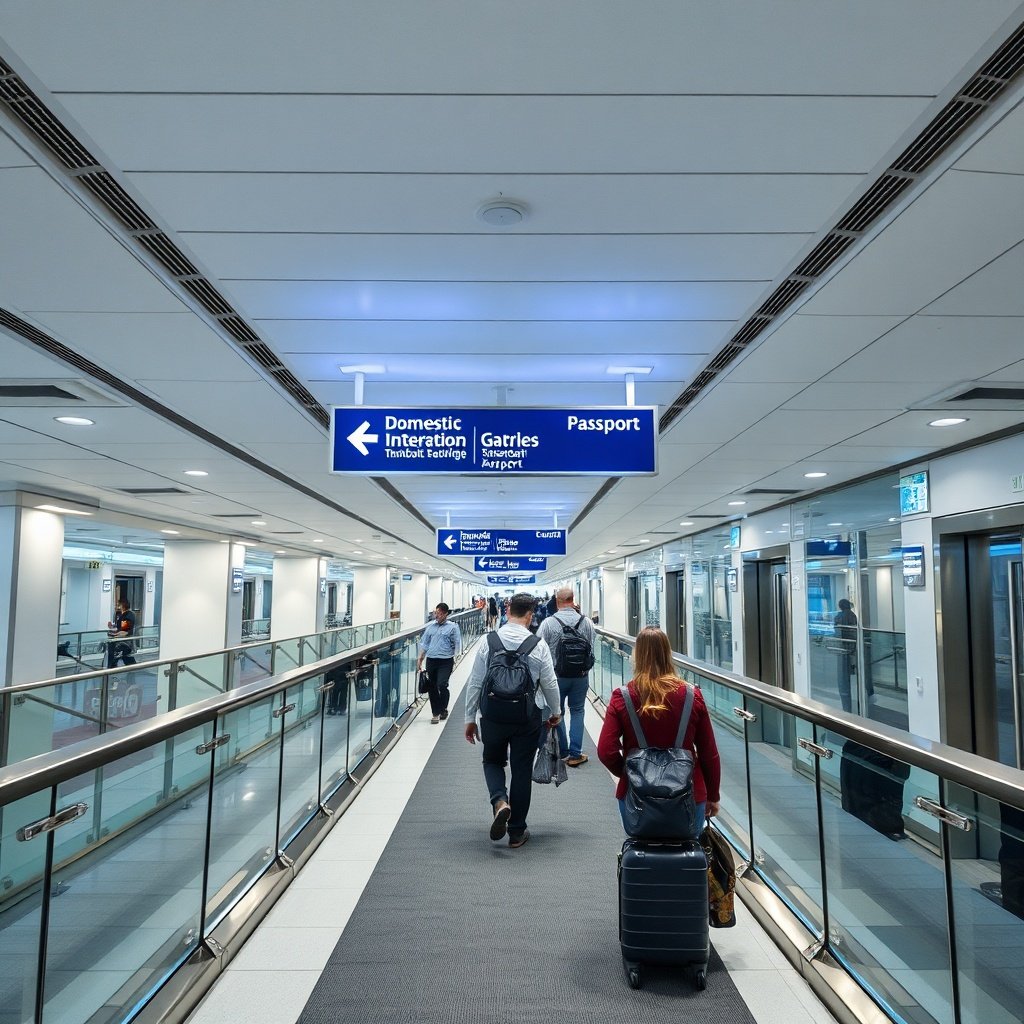
A clear depiction of how travelers move through mandatory verification steps before reaching their assigned boarding gates.
Step 2: Check-in and bag drop
The Istanbul Airport check-in counters are arranged by airline, with Turkish Airlines occupying the largest area given its hub status. Most airlines allow online check-in starting 24 to 48 hours before departure, and you can use a mobile boarding pass on your phone. If you’re checking luggage, you’ll need to find your airline’s dedicated bag drop counters. Self-service kiosks are available at the airport for many airlines, allowing you to print your boarding pass and baggage tags before heading to the bag drop. This can save significant time during peak hours. One important note: if you’re flying internationally, you must have your passport ready at every step — check-in, bag drop, security, and passport control. Keep it accessible.
Step 3: Security and passport control
The Istanbul Airport security wait time can vary significantly depending on the time of day and the number of departing flights. The process is two-stage: first, you pass through security screening, where you’ll need to remove laptops, liquids, and belts from your bags and person. After security, you proceed to passport control for international departures. At passport control, automated e-gates are available for Turkish citizens and eligible foreign nationals with biometric passports. If you’re not eligible for the e-gates, you’ll use a manual counter. The lines at manual counters can be longer, so factor this into your timing. For domestic departures, you’ll pass through security but skip passport control entirely, making the process faster.
Step 4: Boarding and gate access
After passport control, you exit into the airside departure area, which is filled with duty-free shops, restaurants, and lounges. Your Istanbul Airport departures gate is not assigned until after you pass through passport control — you’ll need to check the departure screens to find your gate number. The walking distance to gates at IST can be substantial because the terminal is so large. Depending on your gate, you could walk anywhere from a few minutes to over 15 minutes from the central area. After you find your gate, wait in the gate area until boarding is announced. Gate changes are common at large hub airports, so keep an eye on the screens and your airline’s app.
Quick Answer: Gates at Istanbul Airport are displayed on departure screens throughout the airside area and in your airline’s app. Because the terminal is so large, allow extra time to walk to your gate, especially if you’re assigned one at the far end of the terminal.
Step-by-step: The Istanbul Airport departure process
- Confirm your terminal and flight status before leaving for the airport. Check your airline’s app or website for any schedule changes.
- Enter the departures hall on the upper level of the terminal.
- Use a self-service kiosk or airline counter to check in and print your baggage tags.
- Drop your checked baggage at the designated belt for your airline.
- Pass through security screening. Remove laptops, liquids, and belts from your bags.
- Proceed to passport control and present your travel documents.
- Exit into the airside duty-free and shopping zone.
- Locate your gate on the departure screens.
- Wait in the gate area until boarding is announced.
- Board the aircraft via the designated bridge or bus.
Istanbul Airport vs. Sabiha Gökçen: Which departure experience is better?
Istanbul is served by two airports: Istanbul Airport (IST) on the European side and Sabiha Gökçen Airport (SAW) on the Asian side. If you’re comparing Istanbul Asia airport departures with IST, the experience is noticeably different.
Key differences in departure flow
Istanbul Airport operates from a single, mega-terminal building that handles both domestic and international departures. This means all passengers share the same check-in and security infrastructure, which can create large crowds but also offers more facilities and services. Sabiha Gökçen, by contrast, has a smaller two-terminal structure with separate domestic and international terminals. The security processing is generally faster at SAW because the airport is smaller, but the facilities are more limited. For travelers on low-cost airlines, SAW is often the more convenient option.
Location and transit time to the city
Both airports are located roughly 40 to 45 kilometers from Taksim Square, the central hub of Istanbul. The travel time from the city center to either airport is approximately 45 to 60 minutes by car or taxi, depending on traffic. For public transport, Istanbul Airport has a dedicated metro line (M11) that connects directly to the terminal. Sabiha Gökçen is served by buses and the metro via Pendik station, which requires a transfer. If you’re traveling from the European side, IST is generally more convenient; if you’re staying on the Asian side, SAW is closer.
Comparison table: Istanbul Airport (IST) vs. Sabiha Gökçen (SAW) for departures
| Feature | Istanbul Airport (IST) | Sabiha Gökçen (SAW) |
|---|---|---|
| Terminal structure | Single main terminal | Two terminals (domestic + international) |
| Recommended arrival time | 3 hours before international | 2–3 hours before international |
| Distance to city center | ~40 km from Taksim | ~45 km from Taksim |
| Public transport access | Metro line M11 | Bus + metro via Pendik |
| Typical departure hassle | Large crowds, long walking distances | Smaller, but fewer facilities |
Departure strategies for different traveler types
Transiting passengers (connecting flights)
If you have an recommended Airport-Specific Layover Guides for Istanbul Air and are connecting to another flight, the process depends on whether you’re staying airside or entering Turkey. For international-to-international connections, you’ll skip passport control and go directly to the transfer security screening. After that, you’ll find your next gate in the airside area. If your connection involves a domestic flight, you’ll need to pass through passport control and then re-enter through the departures process, including security. Always check the transit requirements for your specific routing, as they can vary by airline and destination.
Families with children and passengers with reduced mobility
recommended Exploring Fez: A Perfect Layover Experience at t Priority lanes are available at security and passport control for families with children, elderly passengers, and travelers with reduced mobility. If you need assistance, request it from your airline before your flight — they can arrange wheelchair assistance and priority handling. The airport also has family lounges and baby care rooms in the airside area, though their exact locations vary. If you’re traveling with a stroller, you can take it to the gate and check it there for most airlines.
Business travelers and premium passengers
Business class and elite frequent flyer passengers have access to fast-track security lanes at Istanbul Airport, which can significantly reduce the time spent in queues. Turkish Airlines and other carriers operate dedicated check-in areas for business class passengers, separate from the main economy counters. Lounge access is available for eligible passengers, with Turkish Airlines operating several lounges in the airside area. If you have lounge access, plan to arrive early enough to enjoy the amenities before boarding.
Common departure problems at Istanbul Airport (and how to solve them)
Navigating the crowds during peak hours
Like all major hub airports, Istanbul Airport experiences peak departure times. The busiest periods are generally early morning and late evening, when many intercontinental flights depart. During these windows, the standard 3-hour arrival recommendation may not be enough — consider arriving 3.5 to 4 hours before your flight to account for longer queues.
Dealing with last-minute gate changes
Gate changes are a common occurrence at large airports, and IST is no exception. Gate changes are announced via SMS, your airline’s app, and the departure screens. After you pass through passport control, always re-check the departure screens to confirm your gate hasn’t changed. If you hear a gate change announcement, head directly to the new gate — the walking distances at IST can be long.
What to do if you miss your flight or get stuck in security
If you miss your flight, don’t panic. Airline service desks are located airside, near the departure gates area. Head to your airline’s desk to rebook on the next available flight. Note that once you pass through security, there is no exit back to the landside area — you must go to the airline desk airside to resolve any issues.
Quick Answer: If you miss your flight at Istanbul Airport, go directly to your airline’s service desk in the airside area. You cannot exit through security, so all rebooking must be handled from the departure side.
Frequently asked questions (FAQ)
How early should I arrive at Istanbul Airport for an international departure?
The standard recommendation is to arrive 3 hours before your scheduled international departure. This gives you enough time for check-in, bag drop, security screening, passport control, and the walk to your gate. During peak hours, consider arriving 3.5 to 4 hours early.
Is there a separate security check for connecting passengers at IST?
Yes. Connecting passengers transferring from one international flight to another must pass through a dedicated transfer security screening, located in the airside area. If your connection involves a domestic flight, you’ll need to exit and re-enter through the main departures process.
Can I use an e-gate at Istanbul Airport if I am a foreign national?
Automated e-gates are available for Turkish citizens and eligible foreign nationals with biometric passports. Eligibility depends on your nationality and the specific agreements in place. If you’re not sure whether you qualify, use the manual passport control counter.
How long does it take to walk from passport control to the gates at IST?
The walking time varies significantly depending on your gate assignment. The terminal is very large, so you could walk anywhere from a few minutes to more than 15 minutes. Always check your gate number on the departure screens and allow extra time.
What should I do if my flight is delayed and I am already inside the departures area?
If your flight is delayed, you’ll receive updates via your airline’s app, SMS, and the departure screens. You can wait in the gate area, explore the duty-free shops, or use a lounge if you have access. Check the screens regularly for updated boarding times. Related reading: [Istanbul Airport (IST) Complete Guide 2026: Terminals a](https://airport-istanbul.com/istanbul-airport-ist-complete-guide-2026-terminals-and-transfers/) · [Airport-Specific Layover Guides for Istanbul Airport](https://airport-istanbul.com/airport-specific-layover-guides-for-istanbul-airport/)
Conclusion
Navigating Istanbul Airport departures in 2026 comes down to preparation and understanding the process. Arrive early — 3 hours for international, 2 hours for domestic — and follow the step-by-step flow: check-in, bag drop, security, passport control, then gate. The single-terminal design means everything is in one place, but the sheer size of the airport means walking distances can be long. Use the comparison table to decide between IST and Sabiha Gökçen if you have a choice, and remember that connecting passengers have a separate process. With the right planning, your departure from Istanbul Airport can be smooth and stress-free.