

Introduction
If you’ve typed “ist drop off” into a search engine, you’re asking a simple but important question: what is drop-off? This phrase is a German-language query that translates literally as “is drop off” or “what is drop off?” It reflects a genuine need for clarity, especially for German-speaking users who encounter the English term in logistics, e-commerce, and mobility services. This article provides A Complete overview of the definition of drop-off, how the process works, how it compares with pickup, and where you’ll encounter it in daily life. It also addresses common mistakes and practical tips. The term has multiple meanings depending on context — from parcel delivery to car rental to school routines — so the right interpretation matters.
Key Takeaways
- Drop-off is the act of delivering an item, vehicle, or person to a designated location, where the recipient or a service provider takes over responsibility.
- The term is widely used in logistics, e-commerce, car rental, and daily life (e.g., school drop-off).
- Drop-off is distinct from pickup: the customer initiates the delivery, while the service provider collects the item.
- Understanding drop-off procedures helps avoid delays, extra fees, and lost packages.
- In German-speaking regions, “Drop-off” is often used as a loanword, especially in parcel delivery and mobility services.
The Complete Answer: What Is “ist drop off”?
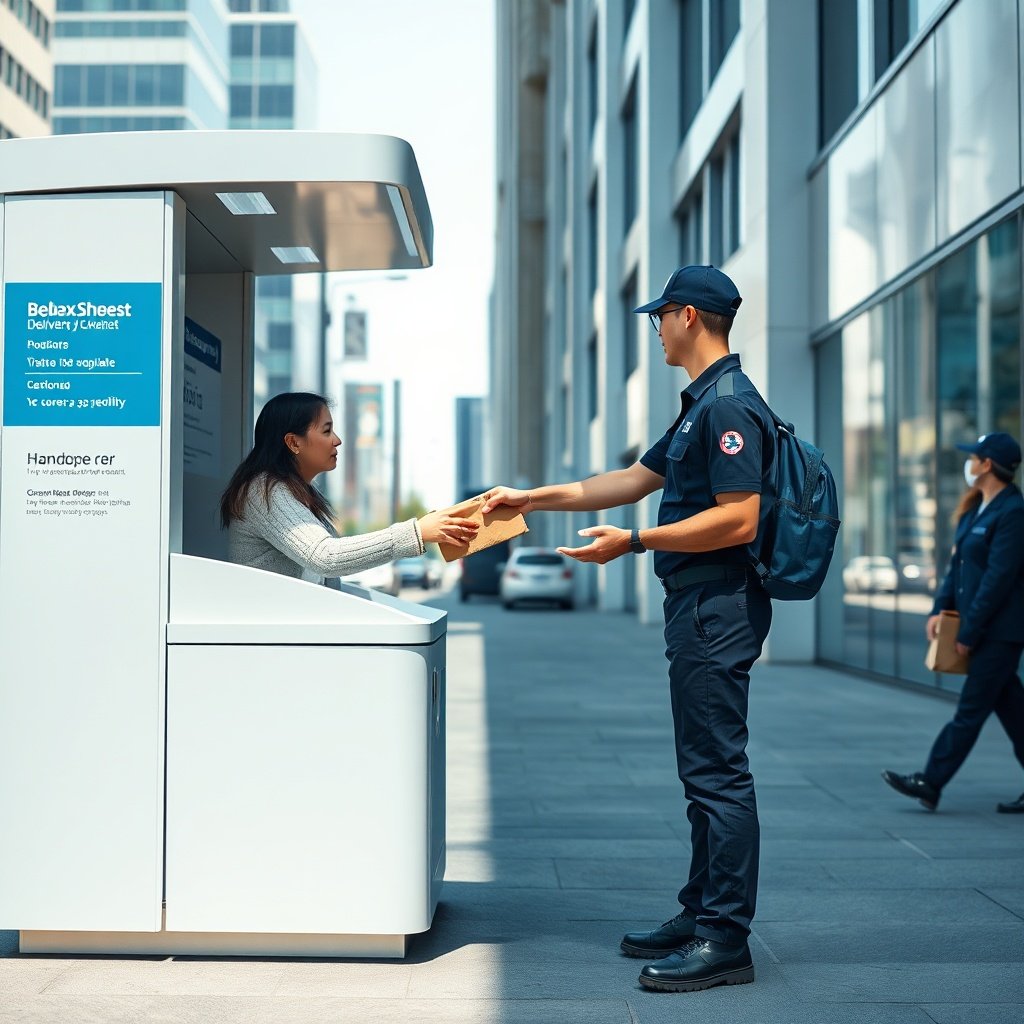
This image illustrates the core concept of ist drop off by showcasing a seamless and responsible package transfer in a modern logistics setting.
Quick Answer: “ist drop off” is a German search phrase asking “what is drop off?” It refers to delivering an item, vehicle, or person to a designated location and leaving it in the care of another party.
The Core Definition
Definition: Drop-off is the act of delivering someone or something to a specific place and leaving it there. The noun form “drop-off” (also written “dropoff”) refers to the act or the location of such a delivery.
As a phrasal verb, “drop off” means to take a person or item to a destination and depart. The key implication is that the person doing the dropping off does not stay. The item or person is left in the care of another party — a courier, a receptionist, a teacher, or a parking attendant. The noun form “drop-off” is used in phrases like “drop-off point,” “drop-off zone,” or “drop-off location.” It can refer to both the action and the physical place where the action happens.

This visual clarifies the ist drop off workflow for renters, highlighting an organized and stress-free vehicle handover experience.
Why “Ist” Matters: The German-Language Context
“ist drop off” is a truncated German query. German speakers often search in this way when they are unsure about an English term. The phrase means “is drop off” or, more practically, “what is drop off?” “Drop-off” has been adopted into German business language, particularly in e-commerce and logistics. German consumers may search this phrase when confused about delivery options like “Paketshop” (parcel shop) or “Packstation” (parcel locker). In these contexts, a drop-off point is where you bring a package for shipment or return, and the courier takes over from there. The term is also common in mobility services. When you return a rental car or leave a vehicle at a service center, you are performing a vehicle drop-off. The German adoption of the English term reflects how international logistics and travel industries have standardized on English vocabulary.
Drop-Off vs. Pickup: A Side-by-Side Comparison
Quick Answer: Drop-off and pickup are opposite directions of the same transaction. With drop-off, you bring the item to a location. With pickup, the service provider brings the item to you or you collect it from a location.
Comparing Customer Experience
The main difference is who moves the item and who initiates the transaction. In a drop-off, the customer travels to a location and leaves something there. In a pickup, the customer receives something from a location, or the service provider collects it from the customer. | Feature | Drop-Off | Pickup | |—|—|—| | Who moves the item | Customer | Service provider | | Customer action | Bring item to a location | Receive item from a location | | Typical use case | Returning a parcel, dropping a child at school | Collecting a purchase, picking up a rental car | | Time commitment | Usually shorter | Often involves waiting or scheduling | | Common fee structure | May be free or included | May incur a pickup fee | From the customer’s perspective, drop-off is often faster because you control the timing. Pickup may involve waiting for a service window or scheduling an appointment. The fee structure also differs: many drop-off services are free or included in the base price, while pickup services may charge a separate fee.
Comparing Business Operations
Businesses design their workflows around the direction of the transaction. For a retailer or courier, drop-off locations are typically staffed counters, automated lockers, or third-party retail points where customers bring packages. These locations need to handle intake, scanning, and storage before the courier collects the items. Pickup operations, on the other hand, require the business to prepare items in advance and manage customer arrival times. This affects inventory management, staff workload, and customer satisfaction. A well-designed drop-off process reduces congestion and processing errors, while a well-designed pickup process minimizes waiting and improves the customer experience.
How a Typical Drop-Off Process Works
Step-by-Step: From Drop-Off to Delivery
- The customer prepares the item (packaging, label, paperwork).
- The customer chooses a drop-off location (e.g., a parcel shop, locker, or counter).
- The customer presents the item and receives a receipt or tracking confirmation.
- The drop-off facility scans the item and registers it in the courier’s system.
- The item is collected by the courier and transported to a sorting hub.
- The item is routed to the destination and delivered or made available for pickup.
- The customer and recipient receive tracking updates throughout the process.
This sequence applies to most parcel drop-off scenarios, whether you are shipping a return or sending a package. The exact steps may vary slightly by provider, but the core logic remains the same: the item enters the courier’s system at the drop-off point, and the courier takes responsibility from there.
Choosing the Right Drop-Off Method
There are several drop-off options, each with different trade-offs. Staffed counters, such as those in parcel shops or post offices, offer personal assistance and immediate confirmation. Automated lockers provide 24/7 access and faster processing but require you to follow the locker’s instructions carefully. Third-party retail points, like convenience stores or supermarkets, offer convenience but may have limited hours and capacity. The best method depends on your situation. If you need proof of drop-off or have a fragile item, a staffed counter is often safer. If you are dropping off outside business hours, an automated locker may be the only option. Availability varies by region and provider, so check with your courier before heading out.
Drop-Off in Different Real-World Scenarios
Package and Parcel Drop-Off
E-commerce returns and shipments rely heavily on drop-off locations. When you return an item, you typically bring the package to a designated drop-off point. The staff scans the barcode on the label, which registers the package in the courier’s system. This scan is your proof of drop-off, so keep the receipt or confirmation. The difference between a drop-off point and a pickup point is important. A drop-off point is where you bring a package for the courier to collect. A pickup point is where you collect a package that has been delivered. Some locations serve both functions, but the process is different for each.
Vehicle Drop-Off (Rental, Service, Parking)
Returning a rental car or leaving a car at a service center follows a similar pattern. You arrive at the designated drop-off area, complete the inspection, note the fuel level, sign the paperwork, and hand over the keys. The rental company or service center then takes responsibility for the vehicle. Airport drop-off zones are a common example. At airports like Istanbul Airport (IST), the departures level features designated drop-off zones. Drivers should check the IST terminal map to find the correct drop-off zone for their airline. If you need more time, short-term parking IST options are available near the terminal. The cost of airport parking IST depends on how long you stay, and IST parking rates are published on the official airport website. The taxi pickup point Istanbul airport is usually separate from the drop-off lanes, so drivers should not confuse the two. For travelers, baggage check-in procedures at IST follow the standard airline process: present your booking, weigh and tag your luggage, and receive your boarding pass before heading to security. If you prefer not to drive, the Istanbul Airport Transfers: Complete Guide to Private, Taxi options provide alternatives. Airport transfer prices Istanbul vary by distance and vehicle type, so compare options before you book. Valet parking and airport drop-off lanes are related scenarios. In both cases, you leave the vehicle in a designated area and hand over responsibility to a service provider.
School and Childcare Drop-Off
Dropping off children at school or daycare is a non-commercial but very common use of the term. Parents drive to the designated drop-off zone, help their child out of the car, and hand them over to staff supervision. Safety procedures, such as designated zones and staff presence, are critical to prevent accidents and ensure every child is accounted for. This use of “drop-off” is different from logistics in one key way: the “item” is a person, and the responsibility moves from parent to school. The process is still a drop-off because the parent leaves the child in the care of another party.
Avoiding Common Drop-Off Mistakes
Quick Answer: The most common drop-off mistakes are forgetting proper packaging, going to the wrong location, and failing to get a receipt. Always verify the address, packaging, and required documents before you leave.
Preparation Before Drop-Off
Before you leave an item or person at a drop-off location, run through a quick checklist. Verify the correct address and the specific drop-off point. Make sure the package is properly sealed and labeled with the correct barcode or address. Bring any required documents, such as a return authorization or ID. Most importantly, ask for a receipt or confirmation. This proves the drop-off occurred and gives you a tracking number if you need to follow up. A photo of the item at the drop-off location can also serve as evidence.
What to Do When Something Goes Wrong
If you lose your receipt, your package is misrouted, or the drop-off is not confirmed, contact the service provider immediately. Provide the tracking number and the time of drop-off. The provider can usually locate the item in their system. Retain any proof of drop-off, such as a photo, confirmation email, or the receipt itself. This documentation is essential if you need to file a claim. Specific resolution timelines and compensation policies vary by provider, so check the terms of service for your specific situation.
FAQ
What does “drop off” mean in German?
“Drop-off” is the English term for “abgeben” or “abliefern.” In German logistics and everyday contexts, it is used as a loanword to describe delivering an item or person to a location.
Is drop-off the same as pickup?
No. Drop-off is delivering, pickup is collecting. They are opposite directions of the same transaction. In a drop-off, you bring the item to a location. In a pickup, you receive the item from a location.
How do I prove I dropped off a package?
A receipt from the drop-off location, a photo of the package, or a tracking confirmation serves as proof. The scan at the drop-off point registers the package in the courier’s system, which is the official record.
Can I drop off a package at any location?
Drop-off options depend on the courier and the region. Some locations accept only specific carriers. Always check with your courier to find an authorized drop-off point.
What happens to my item after I drop it off?
After the drop-off point scans the item, it is collected by the courier, transported to a sorting hub, routed to the destination, and delivered or made available for pickup. Tracking updates keep you informed throughout. Related reading: [A Complete Guide to Booking Istanbul Airport Parking: P](https://airport-istanbul.com/a-complete-guide-to-booking-istanbul-airport-parking-prices-and-reservations/) · [Istanbul Airport Transfers: Complete Guide to Private](https://airport-istanbul.com/istanbul-airport-transfers-complete-guide-to-private-taxi-and-bus/)
Conclusion
Drop-off is a versatile term that appears in logistics, travel, and daily life. The process is straightforward when you prepare well: choose the right location, bring the correct packaging and documents, and always get a receipt. Understanding the difference between drop-off and pickup helps you avoid confusion, delays, and extra fees. The query “ist drop off” reflects a genuine need for clarity, especially for German-speaking users navigating international logistics terminology. Whether you are returning a parcel, returning a rental car at an airport like Istanbul Airport, traveling in Morocco, or dropping off a child at school, the same basic principle applies: you deliver something to a designated place and hand over responsibility. Apply the practical tips and checklists in this article to make your next drop-off smooth and stress-free, just as one would consult The Complete Guide to Airports in Morocco: Ranking by Busies.