
IST Istanbul Airport
  • Departures
  • Arrivals
  • Airlines at IST Airport
  • Services
    • RESTAURANTS AND FOOD
    • Lounges
    • Transports
    • Car rental
  • Parking
  • Contact Us
  • Blog
IST Istanbul Airport
  • Departures
  • Arrivals
  • Airlines at IST Airport
  • Services
    • RESTAURANTS AND FOOD
    • Lounges
    • Transports
    • Car rental
  • Parking
  • Contact Us
  • Blog
IST Istanbul Airport
  • Departures
  • Arrivals
  • Airlines at IST Airport
  • Services
    • RESTAURANTS AND FOOD
    • Lounges
    • Transports
    • Car rental
  • Parking
  • Contact Us
  • Blog
@2023 - Ist Airpot Istanbul, non official airport website. Disclaimer
Istanbul Airport

Ultimate Istanbul Airport Food Guide: Best Eats 2026

by irport-istanbul-Admin 29 July 2026
written by irport-istanbul-Admin

Istanbul Airport Food Guide: A 2026 Culinary Roadmap
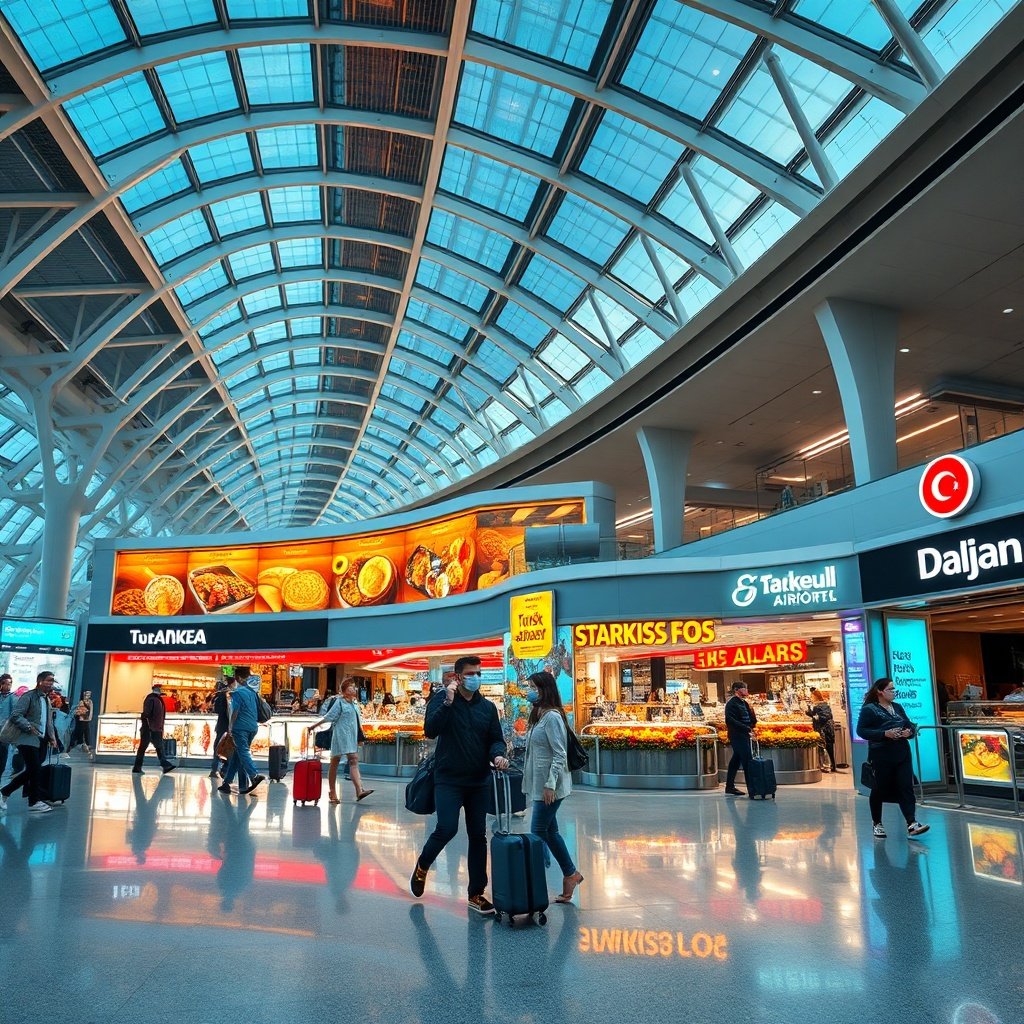
Travelers walking past various dining options and food outlets in the Istanbul airport terminal, illustrating a comprehensive food guide.

Introduction

Istanbul Airport (IST) has evolved into a premier global culinary destination, offering an impressive array of over 200 dining outlets that rival the city’s vibrant restaurant scene. It is a reflection of Turkey’s rich gastronomy designed to accommodate the massive influx of travelers in 2026. With the expansion of the airport’s capacity, Istanbul Airport restaurants have diversified significantly, ensuring that every passenger, regardless of their schedule or budget, finds a meal that suits their taste. Navigating this expansive landscape requires insight, as options range from quick street food bites to luxury sit-down experiences, making it essential to plan your dining strategy fore you fly.

Key Takeaways

A wide view of the busy terminal showcasing the diversity of restaurants.

  • Istanbul Airport offers over 200 dining outlets, ranging from authentic Turkish kebab houses to globally recognized fast-food chains.
  • The “Istanbul International Gastronomy Zone” is the premier destination for travelers seeking a sit-down meal with local wine and views of the runway.
  • Prices in 2026 have adjusted to inflation; expect to pay a premium of approximately 20-30% compared to city center prices for similar items.
  • Halal food is the standard across the airport, but international zones provide diverse options including Italian, Japanese, and vegan cuisine.

The Definitive Overview of Istanbul Airport Dining Options in 2026

Istanbul Airport provides a vast culinary landscape divided strategically between airside and landside areas, catering to all budgets and dietary requirements with remarkable efficiency. As a primary hub connecting East and West, the facility ensures that Istanbul Airport food courts are not just afterthoughts but integral parts of the passenger experience, featuring everything from grab-and-go kiosks to multi-course fine dining. Whether you are looking for a quick snack or a lavish meal, the eating at IST guide reveals that diversity is the standard, with options available 24/7 to match the airport’s non-stop operational rhythm.

The scale of dining here is unmatched in the region. You can find bespoke concepts operated by Turkey’s most celebrated chefs alongside reliable international staples. Most importantly for the weary traveler, the majority of these establishments operate around the clock. This means you can always find a hot meal, regardless of your arrival or departure time. In 2026, digital integration has streamlined the process; while cash is accepted, contactless credit cards and the “İstanbul Kart” app are the preferred payment methods, allowing for swift transactions that help you maximize your time during layovers.

Quick Answer: Does Istanbul Airport have food available 24/7? Yes, the airport hosts numerous 24-hour food service outlets, including major chains in the international transit area and specific cafes, ensuring passengers can always find dining options regardless of flight schedules.

Definition: Airside vs. Landside – “Airside” refers to the secure area past passport control and security checks where boarding gates are located, while “Landside” is the public area before security in the departures hall. Most high-end dining is found airside.

A delicious meal highlighting local gastronomy with a view of the tarmac.

Savoring Authentic Turkish Cuisine: From Kebabs to Baklava

For many travelers, the highlight of this Istanbul airport food guide is the opportunity to immerse themselves in authentic Turkish flavors without leaving the terminal. Instead of defaulting to familiar chains, you should prioritize local eateries that serve as cultural ambassadors. The airport has curated specific Turkish food Istanbul Airport experiences that allow you to taste regional specialties. Sit-down restaurants like “Tadinda Anadolu” offer a refined atmosphere where you can order an Adana kebab—spicy minced meat skewers grilled to perfection—or an Iskender, a dish featuring döner meat over pita bread smothered in tomato sauce and melted butter.

If you are pressed for time, the airport excels in baklava and kebab spots that serve high-quality street food. Look for the ubiquitous “Simit” kiosks selling sesame-encrusted bread rings, often paired with tea, or the “Döner” stands that wrap savory meat in traditional paper. For dessert, you must visit the outposts of famous brands like Karaköy Güllüoğlu. Here, you can purchase boxes of fresh duty free Turkish delight or trays of sticky, nut-filled baklava to take home. These shops offer a taste of Turkey’s famous hospitality and are perfect for last-minute gifts or a personal treat before boarding.

Definition: Döner – A traditional Turkish dish made of meat cooked on a vertical rotisserie. The outer layer is shaved off as it cooks and is typically served in a wrap, on a plate with rice, or in a sandwich.

Global Chains and International Comfort Foods

Plate of traditional Turkish kebab and rice served at a restaurant in Istanbul airport.

While local cuisine is a major draw, this Istanbul airport food guide also recognizes that travelers often seek the comfort of familiar flavors, especially during stressful layovers or when traveling with families. The airport is home to an extensive international terminal food court featuring giants like Burger King, McDonald’s, and Starbucks. These are strategically located near high-traffic boarding gates, providing consistent options for those who prefer predictable meals. The presence of these chains ensures that dietary consistency is maintained, which is crucial for many passengers.

Beyond the standard fast-food fare, casual dining franchises have expanded their footprints significantly following the 2026 terminal renovations. You will find Shake Shack serving premium burgers, Pizza Hut offering familiar slices, and Pret a Manger providing healthier sandwich and salad options. For those craving Asian or Italian cuisines, the duty-free section hosts several noodle bars and Italian sit-down restaurants. These venues offer a break from Turkish fare, providing pasta, risotto, or ramen dishes that rival standalone restaurants in the city, ensuring that the Istanbul Airport restaurants ecosystem truly covers the globe.

Navigating Dining by Location: Duty-Free vs. Gate Areas

Efficiently navigating the terminal is a critical component of this Istanbul airport food guide. Understanding where to eat based on your boarding gate and time constraints can save you from missing your flight. The highest concentration of full-service, high-quality restaurants is located in the central duty-free area, specifically within the International Transit Zone. This zone is ideal for transit passenger meals during layovers exceeding 2 hours. It features spacious seating and a relaxed environment, allowing you to enjoy a meal with a view of the runway.

However, if you have less than 45 minutes before boarding, you should head directly to the food courts located near the boarding piers (A, B, C, D, F, G, H). These gate-side areas focus on grab-and-go options, ensuring you can grab a sandwich or a coffee and reach your gate quickly. It is vital to note that once you pass security, you cannot return to landside. Therefore, if you have a favorite landside spot, you must finish your meal there before proceeding. Checking the Istanbul Airport terminal map food locations via the official app is the best way to find the nearest option to your specific gate, minimizing walking time in this massive structure.

Quick Answer: Where is the best place to eat for a layover? The central duty-free area houses the best airport lounge dining and sit-down restaurants, perfect for layovers over 2 hours, whereas gate piers offer quick kiosks for travelers with less than 45 minutes.

Budgeting and Dietary Restrictions at Istanbul Airport in 2026

Planning your budget is an essential part of using this Istanbul airport food guide effectively. In 2026, prices have adjusted to reflect global inflation and operational costs. Travelers should expect to pay a premium of roughly 20-30% compared to downtown Istanbul. For context, a standard 500ml bottle of water typically costs around 40 TL, while a meal combo at a fast-food chain ranges between 350 TL and 600 TL depending on the venue. Fine dining establishments will naturally command higher prices, but the portion sizes and quality generally justify the cost, particularly for seafood and premium meat cuts.

Dietary needs are well-catered for. Halal food availability is guaranteed across the entire airport, as this is a standard requirement in Turkey. All meat served is Halal-certified. Furthermore, the airport has made significant strides in inclusivity. Vegetarian and vegan dining options have proliferated in the last year. You can find dedicated salad bars, plant-based burger joints, and vegan concept shops that clearly label ingredients. For those with allergies, most major chains provide allergen charts upon request. Travelers with specific dietary restrictions will find the airport accommodating, provided they communicate their needs clearly to the staff.

Conclusion

This Istanbul airport food guide highlights that IST is a destination in its own right, offering a spectacular introduction to Turkey’s culinary heritage. From the savory spices of a kebab to the sweet layers of baklava, the food scene here is designed to impress. By understanding the layout, pricing, and variety of options, you can transform a mundane layover into a delightful culinary adventure. Remember to check your boarding pass for your specific terminal and allow extra time to navigate the long distances between gates and restaurants.

To make the most of your experience, download the official Istanbul Airport app. It provides real-time updates on restaurant wait times, current promotions, and precise locations. Whether you are grabbing a quick coffee or settling in for a feast, Istanbul Airport ensures you leave with a satisfied palate.

FAQ

Is food expensive at Istanbul Airport?

Yes, prices at Istanbul Airport are generally higher than in the city center. As of 2026, travelers should expect a premium of roughly 20-30% on food and beverage items compared to downtown Istanbul prices.

Can you find Turkish food airside at Istanbul Airport?

Absolutely. The airside duty-free area features several authentic Turkish restaurants, including full-service kebab houses and baklava shops, allowing international travelers to sample local cuisine before departure.

Are there 24-hour dining options available at Istanbul Airport?

Yes, the airport operates 24/7, and many dining establishments, including major fast-food chains and several cafes in the transit area, remain open around the clock to serve passengers on late-night or early-morning flights.

Where are the best restaurants for a long layover at Istanbul Airport?

For layovers exceeding 3 hours, the best restaurants are located in the International Transit Zone near the Duty-Free shopping area. These venues offer sit-down service, traditional Turkish hospitality, and comfortable seating.

Is alcohol served in Istanbul Airport restaurants?

Yes, alcohol is served in specific restaurants within the international departure halls and the duty-free zone. However, options may be limited during religious holidays, and hours can vary by specific vendor license.


Meta Description: Discover the ultimate Istanbul airport food guide for 2026. Explore over 200 dining options, from kebabs to global chains, prices, and terminal locations.


29 July 2026 0 comment
0 FacebookTwitterPinterestEmail
Istanbul Airport

Istanbul Airport Sleeping Guide 2026: Pods & Beds

by irport-istanbul-Admin 29 July 2026
written by irport-istanbul-Admin

Istanbul Airport (IST) stands in 2026 as the undisputed busiest transit hub in Europe, serving over 85 million passengers annually with a sprawling terminal complex that can overwhelm even seasoned travelers. Navigating this massive facility during a long layover requires a solid strategy, especially when rest is a priority. This comprehensive Istanbul Airport Sleeping Guide 2026: Pods & Beds cuts through the confusion to present the most effective ways to sleep, recharge, and shower without leaving the airport or breaking your budget. Whether you are transiting internationally without a visa or looking to splurge on luxury, understanding the difference between airside pods and landside hotels is crucial for a comfortable journey.

Key Takeaways

  • IGA Sleepod Availability: As of 2026, IGA Sleepods are the primary budget-friendly option for airside rest, located in the International Departures Terminal.
  • Hotel Accessibility: The YOTELAIR and IGA Airport Hotel are located landside, requiring a visa or entry if you are transiting without a Turkish visa.
  • Free Sleeping Zones: Quiet zones with reclined seating are available airside near the D Gates, but an eye mask and earplugs are essential due to 24/7 lighting.
  • Booking Advance: Pod reservations can be made online up to 24 hours in advance, but walk-ins are accepted subject to availability during peak 2026 travel seasons.

The Definitive Answer: Where to Sleep at Istanbul Airport in 2026

Cozy IGA Sleepod capsule in Istanbul Airport offering budget-friendly rest for travelers during layovers

Futuristic sleep pod in the international departures terminal, ideal for short layovers.

If you need immediate rest at Istanbul Airport, you have three distinct choices depending on your budget and visa status. For travelers with short layovers under 6 hours or those without a Turkish visa, the IGA Sleepod Istanbul Airport located airside in the International Departures area is your primary private option. If you possess a valid visa or have a longer layover (over 8 hours), the YotelAir Istanbul Airport and the Iga Airport Hotel offer full-sized beds and luxury amenities landside. Finally, budget travelers can utilize the free quiet zones near Gates D, though these provide less privacy and comfort. All facilities operate on a 24/7 schedule as of the July 2026 summer timetable, ensuring availability regardless of your flight time.

Quick Answer: Choose IGA Sleepods for convenient airside access without a visa. Opt for YOTELAIR or IGA Hotel landside for luxury showers and full beds, provided you have entry permission. Use free quiet zones only as a last resort for essential gear.

Airside Pod Options

The ISG Airport accommodation for transit passengers is centered around the IGA Sleepods situated airside. You do not need to pass through immigration to access these units. They are strategically located in the International Departures Hall, past security control but before boarding gates. This makes them the ideal solution for Istanbul Airport transit sleep where time is tight and visa regulations restrict movement.

Quiet resting zone with reclined seating at Istanbul Airport for travelers seeking free sleeping options

Comfortable reclined seating area for travelers to rest during long layovers.

Landside Hotel Options

Istanbul Airport transit hotel landside options include the YOTELAIR and the main IGA Airport Hotel. These are located outside the secure area in the general terminal building. Accessing these requires passing through passport control, meaning you must meet Turkey transit visa 2026 requirements. These are best suited for travelers who need to exit the secure area for luggage collection or those who prioritize full-service amenities over proximity to gates.

Inside the IGA Sleepod: A 2026 Review of Istanbul’s Signature Pods

The IGA Sleepod has become the go-to solution for efficient rest at IST. As of 2026, the pods have received software updates and hardware refurbishments to improve ventilation. The units are compact, measuring approximately 1.2 meters wide and 2 meters long, designed strictly for sleeping rather than lounging. The mattress is a high-density foam that provides firm support, significantly better than terminal seating but not quite at the level of a luxury hotel. The Istanbul Airport sleeping pod prices 2026 remain competitive, typically charging by the hour or in 3-hour blocks.

Technology is a major selling point. Each pod features a touchscreen tablet mounted on the wall, allowing you to control the internal lighting spectrum (from warm reading light to cool sleep mode) and ventilation speed. Crucially, the pods come equipped with universal power outlets and USB-C ports, ensuring your devices charge while you sleep. Soundproofing is adequate; the heavy glass door and insulated walls block out the ambient chatter of the terminal, but low-frequency flight announcements may still be audible.

Definition: Airside refers to the secure area of the airport terminal past passport control and security checks, accessible only to departing passengers and transit travelers.

Cabin Sizes and Privacy Features

The standard single pod is sufficient for one adult with a carry-on bag. For couples or those needing extra space, double pods are available, offering a wider bed. Privacy is excellent; the pods feature motorized blackout blinds that seal completely shut, creating total darkness. A robust electronic locking mechanism ensures your security, and you can set your own PIN code upon entry.

Amenities and Soundproofing Quality

While the pods are small, they include thoughtful amenities. High-speed Wi-Fi is included in the rate, and there is designated luggage storage space under the bed frame to keep the floor clear. Fresh linen and a pillow are provided for every booking. Regarding sound, the ventilation system is the primary source of white noise, which actually helps mask the sounds of the terminal. However, light sleepers should still use earplugs for maximum isolation.

YOTELAIR vs. IGA Airport Hotel: Choosing the Right Bed for Your Budget

When Istanbul Airport accommodation options expand beyond pods, you enter the territory of brick-and-mortar hotels. The two main contenders, YOTELAIR and IGA Airport Hotel, cater to different needs. YOTELAIR Istanbul Airport is a “cabins” concept hotel designed for efficiency, located on the ground floor of the terminal. It is a premium budget option. Conversely, the IGA Airport Hotel is a full-scale luxury property located on the mezzanine level, connected via an indoor walkway from the terminal. IST Airport hourly room rates at YOTELAIR are generally more affordable, while the IGA Airport Hotel commands premium pricing reflecting its 5-star status.

For a 6-hour stay in 2026, expect to pay roughly 90-120 EUR at YOTELAIR, compared to 180-250 EUR at the IGA Airport Hotel. The price difference reflects the inclusion of en-suite bathrooms in every YOTELAIR cabin versus the sprawling suites and spa facilities at the main hotel. Both options are significantly more comfortable than pods but require navigating the Istanbul landside access rules, which necessitates a visa for many nationalities.

Quick Answer: Pick YOTELAIR for efficiency, showers, and value without leaving the terminal area. Choose IGA Airport Hotel for full luxury, gym access, and spacious rooms if budget allows.

The YOTELAIR “Cabin” Experience

YOTELAIR specializes in compact “Premium Cabins.” The standout feature is the adjustable “SmartBed,” which utilizes a patented mechanism to convert from a comfortable sofa into a full-length bed with a premium mattress at the touch of a button. Every cabin features an en-suite bathroom with monsoon rainfall showers and complimentary toiletries, making it a top choice for travelers needing to freshen up after a long flight.

Full-Service Luxury at IGA Airport Hotel

The IGA Airport Hotel offers a traditional hotel experience with soundproof windows overlooking the runways. Rooms are spacious, offering work desks and king-sized beds. Guests have access to an executive lounge, a fully equipped fitness center, and a luxury spa offering massage services. This is the best option for travelers who want to disconnect from the airport environment entirely and enjoy a proper meal at a sit-down restaurant.

How to Sleep for Free at Istanbul Airport: Best Quiet Zones and Benches

For Istanbul Airport free sleep, the terminal offers surprisingly comfortable options if you know where to look. The airport is vast, but certain sections are designated for rest. The most reliable spots are located in the International Departures area near Gates B and D on the upper levels. Here, you will find armrest-free benches and reclined loungers installed during the 2026 terminal upgrades. These areas are carpeted, providing a softer surface than the tile found in other concourses.

Be prepared for the environment. The terminal is air-conditioned to a crisp 20-21°C (68-70°F), so the floor can feel cold. Istanbul Airport quiet zone locations are generally safe, and security staff patrol frequently. However, these are public spaces. You will need to secure your luggage tightly. While airport staff generally do not disturb sleepers, they may wake you for security checks if your behavior seems suspicious or if you are obstructing walkways.

Definition: Landside refers to the public areas of the airport terminal before security checks and passport control, accessible to anyone entering the airport.

Identifying the Most Comfortable Seating Areas

Look for the “Relaxation Areas” marked on the terminal maps available near the information desks. The specific zone near Gate D16 is particularly favorable due to its distance from the main duty-free shops, resulting in lower foot traffic. The seating here consists of rows of padded benches without armrest dividers, allowing you to stretch out fully.

Essential Gear for Free Terminal Sleeping

To make Istanbul Airport free sleep bearable, you must come prepared. An inflatable neck pillow is non-negotiable for support on upright seats. A travel blanket or a large scarf is necessary to ward off the aggressive air conditioning. An eye mask is critical; the terminal uses bright, white LED lighting 24/7 to maintain visibility and security. Finally, download a white noise app to block out the occasional cleaning crews and boarding announcements.

Navigating Visa and Transit Rules for Sleep in 2026

Understanding Turkey transit visa 2026 regulations is the most critical logistical step. Passengers flying from an international destination to another international destination (e.g., New York to Delhi) generally remain airside and do not require a visa. This allows you to access the IGA Sleepods and quiet zones freely. However, if you choose to book a room at YOTELAIR or the IGA Airport Hotel, you must pass through immigration, entering Turkey officially.

As of July 2026, many nationalities—including those from the US, UK, and Canada—require an e-Visa to enter Turkey, even for a short hotel stay. Attempting to pass passport control without a valid visa will result in being denied entry and forced to return airside. Always check the official Republic of Turkey e-Visa website before your flight. If you are flying from the US to the UK via Istanbul and have to collect luggage, you are forced landside and must have a visa regardless of where you sleep.

Quick Answer: Stay airside to avoid visa requirements. Only exit security to visit landside hotels if you have a confirmed e-Visa or are visa-exempt.

Staying Airside Without a Visa

The “International Transit” procedure is straightforward. Upon arrival, follow the signs for “International Transfer” or “Flight Connections.” You will pass through a security screening where your hand luggage is scanned, but you will not encounter a passport officer. Once through this point, you are in the International Departures Hall and have direct access to the Sleepods and transit facilities.

Entering Turkey for Landside Hotels

If you decide to use the Istanbul Airport transit hotel landside, follow the signs for “Passport Control” or “Entry.” Have your e-Visa printed or ready on your phone. After clearing immigration, you will enter the public arrivals hall. The hotels are located within a short walking distance from here. Crucially, you must return to the check-in counters at least 2.5 to 3 hours before your connecting flight to clear security and passport control again, adding time to your transit schedule.

FAQ: Istanbul Airport Sleeping

Can I stay airside during a layover at Istanbul Airport?

Yes, passengers on international transit flights can remain airside. This allows access to the IGA Sleepods and free quiet zones without passing through passport control or needing a Turkish visa.

How much does it cost to sleep in a pod at Istanbul Airport in 2026?

Rates for the IGA Sleepod typically start around 60 EUR for a 3-hour block and 100 EUR for an overnight stay (6+ hours), though prices

Navigating a long layover doesn’t have to be an exhausting ordeal. By choosing between the convenience of IGA Sleepods or the luxury of landside hotels, and by understanding the Turkey transit visa 2026 regulations, you can transform your wait into a restful experience. Whether you stay airside to avoid paperwork or venture out for a proper bed, preparation is key to maximizing your comfort. Don’t forget your travel essentials like a neck pillow and eye mask if you opt for the free zones. For a seamless journey through your next stopover, keep this Istanbul Airport Sleeping Guide 2026: Pods & Beds bookmarked. Ready to plan your perfect transit sleep? Check the latest pod availability and visa requirements today to ensure you arrive at your final destination feeling refreshed and ready to explore.

FAQ: Istanbul Airport Sleeping

Do I need a visa to sleep in the transit area? No, if you are transferring between international flights and stay airside, you do not need a visa to access the IGA Sleepods or quiet zones. You only need a visa if you pass through immigration to enter Turkey.

What are the rates for IGA Sleepods? While prices are subject to change, rates for the IGA Sleepod typically start around 60 EUR for a 3-hour block and approximately 100 EUR for an overnight stay of six hours or more.

Can I access the YOTELAIR without a visa? No, YOTELAIR is located landside in the public arrivals area. You must pass through passport control to reach the hotel, which requires a valid e-Visa or visa exemption status.

What should I bring if I don’t book a bed? If you plan to use the free quiet zones, bring an inflatable neck pillow, a travel blanket or large scarf to combat the air conditioning, an eye mask for the bright LED lights, and a white noise app to block out announcements.

29 July 2026 0 comment
0 FacebookTwitterPinterestEmail
Istanbul Airport

Istanbul Airport Fast Track 2026: Worth The Cost

by irport-istanbul-Admin 29 July 2026
written by irport-istanbul-Admin

Istanbul Airport (IST) is projected to handle over 95 million passengers in 2026, creating significant congestion challenges during the summer travel season. Determining if Istanbul Airport Fast Track 2026: Worth The Cost is a priority requires analyzing the specific time of day and ticket class for your journey. Fast Track services provide expedited lanes for security screening and passport control, allowing you to bypass the standard queues that can stretch for hours. The value of this service is not uniform; it provides immense return on investment during peak afternoon hours but offers diminishing returns for late-night red-eye flights. This analysis breaks down the pricing, time-saving mechanics, and specific traveler scenarios to help you decide if upgrading your airport experience is the right move for your itinerary.

Key Takeaways

  • Fast Track services at Istanbul Airport in 2026 can save travelers an average of 45 to 90 minutes during peak arrival and departure times.
  • The service is highly recommended for business travelers, those with short layovers under 90 minutes, and families with small children.
  • Standalone Fast Track passes generally cost between €50 and €100 in 2026, often included free with Business or First Class tickets.
  • The "Meet and Greet" add-on provides the highest ROI for non-Turkish speakers unfamiliar with the airport layout.

The Verdict: Is Istanbul Airport Fast Track 2026: Worth The Cost?

Istanbul Airport Fast Track lane showing travelers enjoying quick security screening, illustrating whether the service is worth the cost

Shows the dedicated Fast Track security lane with happy travelers, highlighting the speed and convenience of the service.

For 2026 travel, Fast Track is "Worth It" for peak-hour travel (08:00–20:00) but "Optional" for off-peak red-eye flights. If you are flying during the day, the service effectively buys you time, which is often more valuable than the cash outlay. Consider the cost-benefit analysis: if a Fast Track pass costs €65 and saves you an hour, you are effectively paying €65 to avoid an hour of stress and potential missed connections. For the average business traveler, this cost is negligible compared to the value of an hour of productive work time.

Due to the expanded terminal operations expected to be fully operational by mid-2026, walking distances between gates and security checkpoints have increased by nearly 15%. This makes the time saved on security even more critical for making tight connections. If you are navigating the massive IST terminal with heavy carry-on luggage, the physical fatigue of standing in line for an additional 60 minutes is a tangible cost that Fast Track eliminates. Therefore, for any traveler valuing comfort and predictability, the service is a justifiable expense.

Quick Answer: Should you buy it?

If your flight departs or lands between 8:00 AM and 8:00 PM, buy Fast Track. The Istanbul Airport security express lane rules are strictly enforced, and regular lanes often exceed 60-minute wait times during these windows. For overnight flights, save your money and use the standard lanes.

Financial Breakdown of Service Tiers

When evaluating Istanbul Airport Fast Track 2026: Worth The Cost, you must look at the specific direction of travel. Arrival services are typically priced higher than departure services because they include passport control, which is generally more time-consuming than security screening.

Based on current 2026 tariff structures, a standard adult Fast Track pass for Departure costs roughly €65, while an Arrival pass is priced around €85. This price disparity reflects the higher staffing costs associated with immigration booths compared to security checkpoints. Children under 6 usually travel free when accompanied by an adult, while those between 6 and 12 often receive a 50% discount, making the proposition more financially viable for families.

Istanbul Airport Fast Track meet and greet assistance helping travelers, showing if the premium service is worth the cost

Depicts a friendly concierge providing personalized Fast Track assistance, emphasizing the added value for travelers.

Analyzing the 2026 Pricing Structure: What Are You Actually Paying?

Pricing for Fast Track is dynamic and fluctuates significantly by season in 2026. During the shoulder seasons (April-May, September-October), prices stabilize at the base rate. However, during the peak summer months of July and August, surge pricing can drive costs up by 20-30%. A departure pass that costs €65 in March might easily cost €85 in late July. It is crucial to factor in these seasonal variations when budgeting for Istanbul Airport VIP service pricing.

Hidden value exists within the ticket that many travelers overlook. While the pass primarily covers the queue bypass, some 2026 vendors include fast-tracked Wi-Fi access vouchers, allowing you to connect to the premium network speed immediately upon clearing security. Additionally, certain packages offer discounts on the airport's internal automated transport system, the iSM (Istanbul Airport Smart Mobility), which helps bridge the long distances between the terminal and the aircraft parking stands.

You have two main purchasing avenues: the official IGA website or third-party vendors like Kiwi or GetYourGuide. Buying directly through IGA offers guaranteed refundability up to 24 hours before your flight, whereas third-party vendors often have stricter non-refundable policies once the booking is confirmed. However, third-party platforms occasionally bundle the service with airport transfers at a slight discount.

Definition: Fast Track Bypass

A Fast Track Bypass is a dedicated security and immigration lane reserved for premium travelers, allowing them to skip the standard queues. It is distinct from priority check-in, which only applies to the bag drop process.

Bundling Options

Bundling is the smartest way to maximize value if you plan to use multiple services. Many travelers analyze Istanbul Airport Fast Track 2026: Worth The Cost in isolation, missing the savings available through combo packages. Purchasing a "Fast Track + Welcome Lounge" bundle is often significantly cheaper than buying the two services separately.

For example, in 2026, a standalone 3-hour lounge pass might cost €45, and a Fast Track arrival pass might cost €85. If purchased together as a bundle, the total is often around €110, resulting in a 15% saving. This is particularly attractive for long-haul travelers arriving in the morning who need a shower and breakfast before heading into the city. Always calculate the bundle price against individual components to ensure you are getting the best deal for your specific layover duration.

Peak Hour Survival: How Fast Track Saves Your Summer 2026 Itinerary

The "Summer Crush" at Istanbul Airport is a predictable phenomenon between 10:00 AM and 2:00 PM. During this window, dozens of wide-body aircraft from Europe, Asia, and the Middle East arrive simultaneously, overwhelming the immigration halls. Istanbul Airport peak hour congestion can transform a 45-minute connection into a missed flight scenario. Historical data from late 2025 indicates that without Fast Track, the probability of missing a connection with less than a 90-minute layover during these hours exceeds 25%.

Using Fast Track during these periods is not just a luxury; it is a logistical necessity. The service protects your itinerary by providing a predictable transit time. While the standard lane wait time is variable and dependent on the number of flights arriving at once, the Fast Track lane is engineered to maintain a maximum wait of 10-15 minutes, regardless of airport volume. This predictability is the single most valuable asset for time-sensitive travelers.

The non-monetary value of stress reduction cannot be overstated. Navigating a foreign, mega-hub airport like IST while anxious about a connecting flight creates a negative travel experience. Fast Track allows you to move through the terminal at a walking pace, collect your bearings, and potentially grab a bottle of water without feeling rushed. For solo travelers or those unfamiliar with the Turkish language, this reduction in anxiety is worth the ticket price alone.

Quick Answer: How critical is timing?

If you have a layover under 90 minutes during the 10:00 AM to 2:00 PM window, Fast Track is essential. IST passport control waiting times can exceed 75 minutes during these peaks, making a connection physically impossible without the express lane.

Real-Time Scenarios

Consider a traveler landing at 11:00 AM with a 2-hour connection to a European destination.

  • Regular Lane Experience: The traveler deplanes at 11:15 AM. Walking to immigration takes 15 minutes. They encounter a queue of 500 people. Waiting in line takes 65 minutes. They clear immigration at 12:35 PM. They must rush to security, wait another 20 minutes, and run to the gate, arriving as boarding closes.
  • Fast Track Experience: The traveler deplanes at 11:15 AM. Walking to the dedicated Fast Track lane takes 15 minutes. They are processed through immigration in 5 minutes. Security takes another 5 minutes. They arrive at the gate at 11:40 AM, giving them 40 minutes to relax, use the restroom, or buy snacks.

The physical path savings are found at the "fork in the road" immediately after the duty-free shop in the international arrivals area. Standard traffic veers left into a snaking maze of barriers, while Fast Track users veer right into a short, direct chute staffed by additional agents.

Business Traveler vs. Tourist: Who Benefits Most from Fast Track?

For corporate travelers, the analysis of Istanbul Airport Fast Track 2026: Worth The Cost is simple. The service is a tax-deductible operational expense that ensures billable hours are not wasted standing in line. If a consultant’s hourly rate is €150, spending €65 to save an hour is a net positive. Furthermore, Turkish Airlines priority check-in benefits often include Fast Track vouchers for Star Alliance Gold members, meaning the cost is already absorbed into the frequent flyer status.

Conversely, budget tourists should evaluate their specific constraints. If you have a 10-hour layover and no checked bags, you can afford to wait in line for an hour. The stress factor is lower because you have a massive time buffer. However, tourists carrying heavy backpacks or those with families may still find the cost justified simply to manage the physical burden of standing in crowded lines with children and luggage.

Families derive unique value from Fast Track. Children often travel free or at a heavily discounted rate (usually €10-€15). Managing a stroller, carry-ons, and a tired child through a winding queue that barely moves is a recipe for a vacation-ruining meltdown. Fast Track allows families to move through the process quickly before children become agitated, preserving the positive start to their holiday.

Visa and Immigration Nuances

Fast Track offers specific advantages regarding immigration that go beyond just skipping the line. In 2026, Turkey has implemented new biometric scanning protocols for entry, which can slow down the e-Visa verification lanes significantly. Regular passengers often struggle with the automated e-Gates or face scrutiny if their e-Visa printouts are not readily accessible.

Fast Track agents act as facilitators. They are often authorized to assist with filling out physical entry forms and guide travelers to the correct biometric kiosks, preventing the "rejected at the gate" scenario that sends tourists to the back of the line. For travelers requiring a Istanbul transit visa or those with complex passport statuses, the assistance provided by the Fast Track staff can be the difference between making a flight and being stuck in the terminal.

Beyond the Queue: The Full Fast Track and Lounge Experience

The premium tier of service, known as "Meet and Greet," elevates the experience significantly. In this scenario, an agent meets you at the jet bridge or baggage claim holding a name sign. They handle the communication with porters, guide you through the Fast Track lane, and escort you directly to your car or the lounge. For non-Turkish speakers or those visiting Istanbul for the first time, Istanbul Airport Meet and Greet services remove the navigational anxiety of the 1.4 million square meter terminal.

Using Fast Track creates a synergy with lounge access. By clearing security in 15 minutes rather than 75, you maximize the time available for Istanbul Airport terminal amenities and lounges. Instead of rushing through a shower, you can enjoy a leisurely meal, utilize the sleeping pods, or take advantage of the spa services. The lounge experience is meant to be decompressive; arriving there breathless and sweaty from a run through the terminal defeats its purpose.

Clearing security early via Fast Track also grants exclusive access to Duty Free shops before the crowds hit. Post-security areas become crowded between 11:00 AM and 3:00 PM as thousands of passengers flood the area. Fast Track users can arrive early, browse the luxury goods, and make purchases in a calm environment, ensuring they get the best selection of tax-free goods before shelves are picked over by the midday rush.

Definition: Meet and Greet

A concierge service where a personal assistant meets the passenger upon arrival (often at the plane or baggage claim) to assist with Fast Track processing, porter services, and navigation through the terminal.

Electric Vehicle Transfer Add-ons

The ultimate luxury combination in 2026 is bundling Fast Track with a VIP electric vehicle transfer from the tarmac to the terminal exit. This service, often utilizing a Mercedes-Benz V-Class, allows you to be driven from the bottom of the plane stairs directly to the curbside departure area, bypassing the terminal entirely if you are in transit.

This is particularly popular for high-profile executives or celebrities who wish to avoid the public areas of the airport. While expensive, often running €300+, it combines the time-saving of Fast Track with the privacy of a secluded transfer. For those asking if Istanbul Airport Fast Track 2026: Worth The Cost applies to ultra-luxury travel, this bundling option represents the pinnacle of efficiency and exclusivity, ensuring that every minute of the transit is managed with zero friction.

Conclusion

Ultimately, Istanbul Airport Fast Track 2026: Worth The Cost is a question of risk management and personal valuation of time. While the service represents an added expense of roughly €65-€85, it functions as an insurance policy against missed flights and unnecessary stress. Given the record passenger volumes projected for the summer of 2026, the likelihood of encountering hour-long queues is statistically high for daytime travelers.

We strongly recommend booking the service at least 48 hours in advance. Same-day booking often results in "sold out" errors, particularly during the peak summer season when demand outstrips the capacity of the express lanes. Do not rely on purchasing the service at the airport kiosk, as these often have limited inventory and higher prices.

Check your specific flight times against the "Peak Hour" guide provided in this

29 July 2026 0 comment
0 FacebookTwitterPinterestEmail
Travel

Exciting Things to Do at Istanbul Airport While Waiting for Your Next Flight

by airport-istanbul.com 21 July 2026
written by airport-istanbul.com
Exciting Things to Do at Istanbul Airport While Waiting for Your Next Flight

Explore the Stunning Architecture

Istanbul Airport, renowned for its striking modern design, stands out as a paragon of contemporary architecture. As travelers enter the terminal, they are greeted by an expansive layout that encapsulates both functionality and aesthetic appeal, creating an inviting atmosphere for all visitors. The terminal building features a bold and innovative design, characterized by high ceilings, extensive use of glass, and sweeping lines that draw the eye towards the horizon, effectively conveying a sense of space and light.

One of the architectural highlights of Istanbul Airport is its central atrium, which is a remarkable feature that adds to the grandeur and spaciousness of the terminal. This area often showcases artistic installations that reflect both modernity and cultural heritage, allowing travelers to absorb the local artistic expressions while they wait for their flights. Various art pieces, which may include sculptures and wall murals, are thoughtfully placed throughout the terminal, encouraging exploration and appreciation.

Additionally, the airport’s unique design incorporates sustainable elements, demonstrating an awareness of environmental impact through the use of energy-efficient systems and materials. This commitment to sustainability enhances the overall travel experience at Istanbul Airport, aligning with the expectations of modern-day travelers. Areas designed for relaxation and social interaction are abundant, including comfortable seating regions and exquisite dining spaces that further enrich the traveler’s experience.

In conclusion, Istanbul Airport is not merely a transit point; it is a visual feast that reflects the city’s rich cultural tapestry while showcasing cutting-edge design principles. For passengers with time to spare, wandering through its impressive architecture not only provides aesthetic pleasure but also an opportunity to engage with the dynamic atmosphere that characterizes this hub of international travel.

Indulge in Fabulous Dining Options

When spending time at Istanbul Airport, travelers are presented with an impressive range of dining options that cater to various tastes and preferences. The airport features an array of restaurants, cafes, and bars, offering everything from traditional Turkish delicacies to renowned international dishes.

For those keen to sample local flavors, the airport doesn’t disappoint. Guests can indulge in authentic Turkish cuisines, such as kebabs, pide (Turkish pizza), and baklava, ensuring a tasty experience that reflects the country’s rich culinary heritage. Popular spots like Simit Sarayı provide delicious Turkish pastries and light snacks, perfect for a quick bite while waiting for a flight.

In addition to Turkish offerings, travelers will find international eateries that provide a diverse range of options. From Italian trattorias serving pasta and pizza to Asian bistros featuring sushi and dim sum, there is truly something for everyone at Istanbul Airport. The airport’s design ensures that wherever guests may be, access to quality food is never far away.

For those looking for a quick meal or grab-and-go option, the food courts offer an excellent variety of fast food venues. These centers allow travelers to enjoy a meal without taking too much time away from their schedules, making it easier to savor the culinary scene without compromising on convenience.

As one navigates through Istanbul Airport, be sure to explore the various dining establishments. Whether it’s a leisurely meal or a quick snack, the airport’s culinary landscape reflects both local cuisine and international fare, enhancing the overall travel experience.

Shopping at Istanbul Airport

When traveling through Istanbul Airport, one can discover an extraordinary shopping experience that goes beyond mere necessity. This airport is a vast retail hub showcasing a myriad of options, which include both local artisan shops and prestigious luxury brands. As you navigate through the expansive terminals, you will encounter a carefully curated selection of goods that celebrate both the rich culture of Turkey and renowned international names.

For those looking to take a piece of Istanbul home, there are numerous artisan shops that offer unique souvenirs crafted with traditional techniques. These shops are perfect for purchasing items like handwoven textiles, intricate ceramics, and sterling silver jewelry. Each piece tells a story, making for personal gifts or treasured keepsakes. Moreover, shopping for souvenirs in Istanbul Airport allows you to avoid the hassle of finding these items in local markets, especially when time is limited.

In addition to local crafts, Istanbul Airport boasts a variety of high-end luxury brands, perfect for travelers seeking a more upscale shopping experience. Renowned fashion labels and beauty brands have set up flagship stores within the airport, creating an impressive environment for shoppers. If you happen to be in the market for luxury goods, browsing through these shops can make for a rewarding experience, especially with the array of products available.

Furthermore, travelers can enjoy duty-free shopping options at Istanbul Airport, which enable significant savings on both local and international products. To maximize your shopping experience, it is advisable to keep an eye out for special promotions and exclusive products that are only available at the airport. By planning your purchases wisely, you can find excellent deals on perfumes, cosmetics, and fine spirits, ensuring that your time spent at the airport is both enjoyable and fruitful.

Relax and Unwind in Comfort Zones

Traveling can often lead to a considerable amount of stress and fatigue, particularly during layovers and waiting times at airports. Fortunately, Istanbul Airport has anticipated these needs and has established various comfort zones designed to help passengers relax and rejuvenate. One of the standout features is the extensive range of lounges. These lounges collectively offer a serene environment where travelers can escape the bustling terminals. Amenities typically found include comfortable seating, complimentary refreshments, and even dedicated workspaces for those wishing to catch up on emails or tasks before their flight.

Another significant element of relaxation at Istanbul Airport is its resting areas, which provide an opportunity for passengers to take a break and recharge. These areas are equipped with reclining chairs, quiet zones, and charging stations, making them ideal for a serene respite. By embracing these comfortably furnished spaces, travelers can alleviate the stress of their journey and prepare themselves for the next leg of their trip.

For those specifically looking for wellness treatments, Istanbul Airport offers various spa services. Passengers can indulge in massages, facials, and other revitalizing treatments that help reduce travel-related tension. Additionally, the airport includes shower facilities, ensuring that travelers can freshen up before continuing their journey. Taking advantage of these wellness amenities not only elevates your travel experience but also promotes a feeling of comfort and relaxation.

To maximize your downtime, consider planning your layover to include a visit to these relaxation options. Booking in advance might be necessary for some services, particularly the spa treatments, so be sure to check out the available options upon arrival at Istanbul Airport. With so many comfortable choices, you can transform waiting time from a stressful experience into a rejuvenating one.

21 July 2026 0 comment
0 FacebookTwitterPinterestEmail
Travel

How to Get from Istanbul Airport to City Center: Best Transport Options 2026

by airport-istanbul.com 21 July 2026
written by airport-istanbul.com
How to Get from Istanbul Airport to City Center: Best Transport Options 2026

Introduction

Traveling from Istanbul Airport to the city center is a pivotal aspect of any visit to this vibrant metropolis. As one of the major hubs bridging Europe and Asia, Istanbul attracts millions of tourists each year, making the choice of transport from the airport crucial for a hassle-free experience. This post aims to guide travelers through the various transport options available, helping to facilitate a smooth transition from the airport to key areas of interest, including Taksim and Sultanahmet.

With the extensive range of accessibility options, visitors can select from public transportation, taxis, shuttles, or even private transfers. Each method has its merits, with factors such as cost, convenience, and travel time varying significantly among them. Highlights include potential savings when utilizing public transport or the luxury of comfort and speed with private options.

Particularly, Taksim and Sultanahmet are two of the most popular destinations for travelers. Taksim, known for its lively atmosphere and modern amenities, serves as a hub for public transport and a vibrant social scene. Conversely, Sultanahmet, rich in historical significance, features a concentration of Istanbul’s most iconic landmarks, including the Hagia Sophia and the Blue Mosque. Thus, understanding the best transport methods to these areas not only enhances the travel experience but also assists in better planning and time management.

In the following sections, we will delve deeper into the specifics of each transport option, providing insights that will empower travelers to make informed decisions while navigating from Istanbul Airport to the city center efficiently.

Overview of Transport Options

Travelers arriving at Istanbul Airport have several efficient transport options to reach the city center. These alternatives cater to various preferences, budgets, and convenience levels, making it essential for visitors to choose the option best suited for their needs.

The Havaist buses provide a budget-friendly option for those who prefer to travel by public transport. Operating on numerous routes to key destinations across Istanbul, these buses are equipped with comfortable seating and luggage compartments, making them a popular choice among both locals and tourists.

Alternatively, the IETT public bus system offers additional routes from the airport, providing access to different parts of the city. Though slightly less convenient than the Havaist buses, they are an economical option for travelers who do not mind making transfers along the way.

Taxis are another viable option, offering door-to-door service. They provide a quick means of reaching the city center, with the added benefit of 24/7 availability. However, it is critical for travelers to be mindful of potential traffic congestion and fare rates, particularly during peak hours.

For those who prefer personalized service, private transfers can be arranged in advance. This option often includes premium vehicles and professional drivers, ensuring a hassle-free experience from the moment one lands at the airport.

In addition, Istanbul has made strides toward modernizing its transport infrastructure with the introduction of metro and railway options. A connection from the airport to the metro system is in progress, which will provide an efficient route to various parts of the city. Lastly, travelers might also consider car rentals for more flexibility during their stay, allowing them to explore Istanbul at their own pace.

Havaist Buses

The Havaist bus service is one of the most convenient and economical options for travelers looking to travel from Istanbul Airport to the city center. Operated by the Istanbul Metropolitan Municipality, Havaist buses offer a range of routes catering to key areas in Istanbul, including prominent stops like Taksim, Sultanahmet, and Kadikoy.

Routes are designed to efficiently connect the airport with various destinations throughout the city. Specifically, the bus line to Taksim (Havaist line 24) and Sultanahmet (Havaist line 30) are particularly popular among tourists. The travel time from Istanbul Airport to Taksim is approximately 90 minutes, depending on traffic conditions, while the journey to Sultanahmet may take a similar duration under typical circumstances. Buses run at regular intervals, approximately every 30 minutes, ensuring that travelers do not have to wait long to catch a ride.

As for pricing, the fare for a single trip on the Havaist bus is affordable, generally around 30 Turkish Lira, making it a budget-friendly choice for many. Passengers are required to obtain an Istanbulkart, a rechargeable transportation card, which can be used on all forms of public transport, including Havaist buses.

User feedback has largely highlighted the reliability and comfort of the Havaist service. Many passengers appreciate the spacious seating, air conditioning, and the storage space for luggage, making the journey more comfortable, especially after long flights. Riders have also noted the convenience of not having to navigate through the city streets or deal with heavy traffic in taxis. Overall, Havaist buses offer a seamless introduction to the vibrant city of Istanbul, providing reliable and comfortable transport for all travelers.

IETT Buses

The Istanbul Electricity, Tramway and Tunnel General Management (IETT) operates a comprehensive network of public buses that connect the Istanbul Airport to various locations in the city center, making it a durable transport option for both locals and travelers alike. Passengers can utilize the IETT Bus services that include routes such as Line 96 and Line 96A, which offer direct connections from the airport to popular destinations, including Taksim Square and Karakoy.

As of 2026, the fare for IETT buses is set at approximately 30 Turkish Lira, making it a cost-effective alternative to other transport methods. Passengers can pay using an Istanbulkart or a contactless payment option. Travel times can vary depending on traffic, but typically range from 30 to 60 minutes for reaching the city center, especially during peak hours.

When comparing IETT buses to the Havaist airport shuttle service, there are several factors to consider. The Havaist buses, although slightly more expensive, provide a more luxurious travel experience with comfortable seating and free Wi-Fi. They are designed to target tourists and travelers who prioritize convenience. However, the IETT buses are integrated into the extensive public transport network of Istanbul, which allows for seamless transfers to other forms of transportation such as trams and ferries, enhancing the overall travel experience.

Overall, while IETT buses may not offer the same level of luxury as Havaist, they provide a dependable, economical, and effective means of transportation from Istanbul Airport to the city center. This makes them an attractive option, particularly for those who prefer to immerse themselves into the local culture as they navigate through the city.

Taxis from Istanbul Airport to City Center

Taxis present a convenient mode of transportation for reaching the city center from Istanbul Airport. They are readily available at designated taxi stands, and the process of hailing a taxi is straightforward and hassle-free. Operators employ a meter-based fare system, which ensures a fair pricing structure as long as travelers avoid unlicensed taxi services. As of 2026, the estimated fare for a taxi ride to the city center generally ranges between 200 to 300 Turkish Lira, depending on traffic and the exact destination.

Waiting times for taxis can vary, but typically, within Istanbul Airport, travelers can expect minimal delays due to the high demand for transport services. Taxis operate on a 24/7 basis, making them a reliable choice for those arriving on late-night or early-morning flights. Furthermore, for individuals traveling with heavy luggage or in groups, taxis provide ample space and comfort. This characteristic enhances the overall travel experience, allowing for a more convenient transfer directly to one’s accommodation without the need to struggle with public transport.

Despite these advantages, there are a few potential downsides to using taxi services. For instance, during peak hours, traffic congestion can considerably extend travel times. Additionally, passengers may sometimes encounter unlicensed or fraudulent taxis if caution is not exercised. Therefore, it is advisable to utilize the official taxi ranks located outside the arrivals terminal, ensuring safety and reliability. Moreover, while taxi services are generally safe, it is prudent for passengers to remain aware of their surroundings, particularly when traveling alone, to ensure a secure journey.

Exploring Private Transfer Services

Private transfers from Istanbul Airport to the city center offer an efficient and comfortable option for travelers seeking a seamless journey. These services ensure that visitors can bypass the potential chaos of public transport upon arrival. They are ideal for families, groups, or those who simply prefer a more luxurious experience. Typically, private transfer services can be booked in advance, providing peace of mind when it comes to schedule adherence and easy navigation through the city.

The costs associated with private transfers can vary significantly based on the provider, vehicle type, and booking method. On average, travelers can expect to pay anywhere from 40 to 100 Euros for a standard car service, with larger vehicles commanding higher fees. It is advisable to compare prices from various companies to ensure that travelers secure the best possible deal. Websites for booking transfers often feature user reviews, which can be beneficial in assessing the reliability and quality of service.

To arrange a private transfer, travelers have several convenient options. Many reputable companies, such as “Istanbul Airport Transfers” and “Blacklane,” allow online reservations. After providing flight details, users receive confirmation quickly, alongside a designated meeting point at the airport. For those who prefer to explore further, local travel agencies can also assist in arranging private transfers tailored to specific needs.

When searching for the best deals, individuals should consider leveraging promotional codes, seasonal discounts, or last-minute deals offered by some companies. Signing up for newsletters from transfer service providers could also lead to exclusive offers. Ultimately, securing a private transfer fosters a stress-free start to any visit to Istanbul, combining convenience with comfort.

Metro/Train Options

The public transport system in Istanbul includes efficient metro and train services that connect Istanbul Airport to the city center, offering a convenient travel option for both locals and tourists. The newly constructed M11 metro line specifically serves the airport, providing a direct route to the city. Once operational, this line will significantly reduce the travel time compared to other transport methods.

Currently, travelers can access the airport from the city center via the H2 bus service, which offers a direct link to various high-traffic areas including Taksim Square and Levent. The H2 bus takes approximately 40-60 minutes, depending on traffic conditions, and operates frequently throughout the day, making it a popular option for airport transfers.

For those opting for the metro system when it is fully integrated, the travel time is expected to be around 30 minutes to reach major hubs such as Şişli and Kağıthane, where connections can be made to other metro lines extending throughout the city. This efficiency is a key advantage, particularly during peak traffic hours, when road transport can become significantly delayed.

Accessibility is also an essential consideration for travelers. The new metro line is designed to be fully accessible for individuals with disabilities, featuring ramps and designated spaces for wheelchairs. Additionally, the buses serving the airport are equipped to handle travelers with mobility challenges, ensuring that public transport remains an inclusive option for all.

Overall, the integration of the metro and train services, along with the existing bus routes, enhances the public transport network, making it easier for visitors to navigate between Istanbul Airport and the city center. This increasingly comprehensive transport options will appeal to those looking for economical and efficient travel in Istanbul.

Car Rental

Car rental is a viable transportation option for travelers looking to explore Istanbul at their own pace. At Istanbul Airport, multiple reputable car rental companies operate, including international brands such as Hertz, Avis, Budget, and local companies like Rent Go and Circular. These companies offer a range of vehicles for various needs, from economy cars to larger SUVs, catering to different budget levels.

The cost of renting a car in Istanbul can vary significantly depending on the vehicle type and rental duration. Generally, prices can range from €20 to €100 per day. It is advisable for travelers to book their vehicles in advance, especially during peak tourist seasons, to secure the best rates. Most companies offer comprehensive insurance options, which are highly recommended to mitigate potential risks while driving in a busy city.

While driving in Istanbul can provide the freedom to explore less accessible areas, it is imperative for visitors to be aware of the challenges associated with navigating this bustling metropolis. Traffic congestion is commonplace due to the city’s high population density and limited road infrastructure. Visitors should prepare for potential delays, particularly during rush hours.

Parking in Istanbul can be another hurdle. Although some hotels offer on-site parking, it may come at an extra cost. Street parking is limited and may require the use of metered kiosks. Travelers are encouraged to familiarize themselves with local parking regulations to avoid fines. Additionally, many city center areas have pedestrian-only zones, making it crucial for drivers to plan their routes carefully.

Navigating Istanbul can be overwhelming, but using a reliable GPS or a navigation app can significantly enhance the experience. This will aid in avoiding heavily trafficked areas and help locate designated parking spots. Overall, while car rental offers flexibility, visitors should weigh the pros and cons, considering the local driving conditions.

Comparison Table and Recommendations

When navigating from Istanbul Airport to the city center, travelers have various transportation options available. Below is a comprehensive comparison table that highlights different transport modes, including their routes, prices, time durations, and user ratings.

Transport OptionRoutePrice (Approx.)Travel TimeUser Ratings
TaxiIstanbul Airport to City Center€20-€3040-60 minutes4.5/5
Private ShuttleDoor-to-Door Services€30-€5030-50 minutes4.7/5
Public BusHavaist Services€360-90 minutes4.0/5
MetroM11 Line to City€160-80 minutes4.3/5

Based on the above comparison, different modes of transport cater to various traveler needs and preferences. For those prioritizing comfort and convenience, a private shuttle service is highly recommended due to its flexibility and door-to-door service. However, budget-conscious travelers may consider the public bus option, which is affordable while still providing adequate comfort.

For travelers seeking a balance between cost and convenience, taxis are a suitable choice. They offer direct transport without the need for navigating public transport schedules. Meanwhile, the metro option presents an economical choice but may involve longer travel times compared to the other options.

For a hassle-free experience, especially during peak travel times, booking in advance is advisable, particularly for shuttles. Ultimately, choosing the best transport option depends on individual circumstances such as budget, time constraints, and desired comfort levels.

21 July 2026 0 comment
0 FacebookTwitterPinterestEmail
Travel

Istanbul Airport (IST) Complete Guide 2026: Terminals and Transfers

by airport-istanbul.com 21 July 2026
written by airport-istanbul.com
Istanbul Airport (IST) Complete Guide 2026: Terminals and Transfers

Overview of Istanbul Airport (IST)

Istanbul Airport (IST) has rapidly emerged as one of the most significant international transport hubs in the world. Officially opened on October 29, 2018, this state-of-the-art facility represents a major development in global air travel infrastructure. The airport is strategically located on the European side of Istanbul, making it exceptionally accessible for travelers from various regions. With its central geographic positioning, it serves as a vital link between Asia, Europe, and beyond, contributing to Istanbul’s status as a key player in global aviation.

The architectural design of Istanbul Airport is both innovative and functional. The terminal spans an impressive area, designed to handle up to 90 million passengers annually, with future expansions planned to increase capacity even further. This modern design incorporates large open spaces, advanced technology, and environmental sustainability measures, embodying a new era of air travel. Passengers are welcomed into an expansive terminal that is equipped with an array of amenities, including retail shops, dining options, and relaxation zones, ensuring a comfortable journey from start to finish.

Istanbul Airport’s significance goes beyond mere capacity; it plays a crucial role in enhancing travel logistics. As a nexus for airlines worldwide, the airport offers numerous direct flight options to various destinations, solidifying its status as a principal gateway for international travelers. The facility not only connects Europe and Asia but also serves as a connecting point for flights to the Americas, Africa, and the Middle East, providing vital access to regions that were previously challenging to reach. In essence, Istanbul Airport stands as a landmark achievement in aviation history, destined to redefine the future of global air travel.

Terminal Information and Amenities

Istanbul Airport (IST) boasts a state-of-the-art design with multiple terminals aimed at creating a seamless travel experience for passengers. The primary terminal at Istanbul Airport is the International Terminal, which serves a multitude of destinations worldwide. In addition to the main terminal, there is a domestic terminal specifically dedicated to flights within Turkey, ensuring that connections between domestic and international travel are efficient.

The International Terminal is particularly impressive, featuring a wide array of amenities to enhance passenger comfort. Travelers can find numerous premium lounges, including those provided by major airlines, where they can relax, enjoy complimentary refreshments, and access high-speed Wi-Fi. For shopping enthusiasts, the terminal houses a comprehensive selection of retail outlets, from duty-free shops to luxury boutiques, allowing travelers to indulge in a bit of leisure shopping while waiting for their flights.

Dining options are plentiful at Istanbul Airport, with a variety of restaurants, cafes, and fast-food chains available. Whether one craves traditional Turkish cuisine or international fare, there is something to satisfy every palate. Additionally, family-friendly services, such as children’s play areas and changing facilities, ensure that families traveling with young children have a comfortable and enjoyable experience.

Accessibility is a key consideration at Istanbul Airport, as it offers various services for travelers with special needs. This includes wheelchair assistance, accessible restrooms, and designated seating areas. Check-in at the airport is facilitated by advanced technology, allowing travelers to quickly and efficiently complete their check-in process, whether through automated kiosks or traditional counters.

With its modern architecture and extensive amenities, Istanbul Airport stands out as a significant transportation hub, combining functionality with passenger well-being. This careful attention to detail in both terminal layout and services greatly enhances the overall travel experience, making Istanbul Airport a model facility in the aviation industry.

Transfer Options and Transportation

Traveling to and from Istanbul Airport (IST) offers several transfer options, facilitating smooth transportation across the city and beyond. For passengers seeking public transportation, the Istanbul Airport is well-connected with a variety of services, including buses, taxis, and shuttles. The Havaist airport shuttle operates an extensive network of routes connecting the airport with various locations in Istanbul, making it a convenient and economical choice for those not requiring private transport.

Taxis are readily available at the airport, providing a flexible and straightforward way to reach various destinations within the city. The taxi stand is clearly marked, ensuring that travelers can easily access this service. It is advisable for visitors to confirm the taxi fare before starting their journey, especially during peak hours when demand may drive prices up.

For those preferring a more tailored experience, private car hire options are also prominent. Several rental companies operate at Istanbul Airport, offering a selection of vehicles that cater to different needs and preferences. Booking in advance is recommended to ensure availability and competitive pricing. Furthermore, many hotels in Istanbul provide shuttle services that can be arranged prior to arrival, offering another layer of convenience.

International travelers connecting through Istanbul Airport should be aware of potential inter-terminal transfers, especially if they are flying with different airlines. Clear signage guides passengers through the airport, and assistance desks are available for any inquiries. It is important to allocate sufficient time between connecting flights as transfers may require a bit of walking between terminals.

In conclusion, whether utilizing public transport services, taxis, or private car hires, Istanbul Airport provides diverse options for travelers, ensuring a seamless transition between journeys. Each option accommodates varying budgets and preferences, all aimed at enhancing the travel experience.

Tips for a Smooth Travel Experience

Traveling through Istanbul Airport, one of the busiest hubs in the world, can be a seamless experience with a bit of planning and awareness. To facilitate your journey, it is essential to familiarize yourself with the layout and services of this extensive airport, which spans multiple terminals, each catering to a myriad of international airlines.

Upon arrival, travelers should prioritize understanding the airport’s layout. Maps are prominently available at various points, and digital screens throughout provide real-time information regarding flights and boarding gates. It is advisable to allocate extra time for navigating the airport, considering that it can take longer than expected, especially during peak hours.

Security procedures at Istanbul Airport are stringent, similar to other major airports around the globe. Travelers are encouraged to review the latest security guidelines before departure, ensuring compliance with carry-on restrictions and liquid regulations. Having identification and boarding passes readily available will expedite the security process. To minimize potential delays, consider arriving at the airport at least three hours before your scheduled departure.

For those with layovers, making use of the airport’s extensive amenities can help pass the time comfortably. Istanbul Airport boasts a variety of shops, restaurants, and lounges where travelers can relax. Free Wi-Fi is available throughout the terminals, enhancing connectivity for those wishing to stay in touch or catch up on work. Charging stations are also conveniently located, ensuring devices remain powered for your next flight.

Lastly, should you require assistance, customer service points are situated throughout the airport. Staff are equipped to answer queries or address any concerns that may arise, making your travel experience through Istanbul Airport as smooth as possible. By incorporating these tips into your travel plans, you can ensure a more enjoyable journey at this remarkable airport.

21 July 2026 0 comment
0 FacebookTwitterPinterestEmail
Istanbul Airport (IST)
Travel

Top Activities to Experience in Istanbul During Summer 2026

by airport-istanbul.com 11 July 2026
written by airport-istanbul.com
Top Activities to Experience in Istanbul During Summer 2026

Exploring the Historic Sultanahmet District

The Sultanahmet district, often referred to as the heart of Istanbul, is a spectacular showcase of the city’s rich history and cultural heritage. This area is home to some of the most iconic landmarks that bear witness to centuries of history, including the magnificent Hagia Sophia, the stunning Blue Mosque, and the opulent Topkapi Palace. Each of these architectural wonders reflects the grandeur of their respective eras, drawing visitors from around the world to experience their beauty and significance.

The Hagia Sophia, originally built as a cathedral, later transformed into a mosque and now operates as a museum, stuns visitors with its impressive dome and intricate mosaics. The Blue Mosque, known for its striking blue tiles and stunning minarets, is a functioning mosque that welcomes both worshippers and tourists alike. Then, there’s the Topkapi Palace, which served as the residence of Ottoman sultans for nearly 400 years, offering a glimpse into the lavish lifestyles of the past through its richly decorated rooms and sprawling gardens.

As visitors explore the historic Sultanahmet district during the summer, several practical tips enhance the experience. First and foremost, guided tours provide invaluable insights into the history and architecture of these sites, making visits more informative and engaging. Additionally, the summer months can be hot and crowded; hence it is advisable to visit early in the morning or later in the afternoon to avoid peak tourist hours. Local attractions, such as the Hippodrome and the Basilica Cistern, are also within walking distance, allowing for a full day of exploration. Engaging with local food vendors and nearby markets adds to the authentic Istanbul experience, creating memorable moments during your visit to this historic district.

Enjoying a Bosphorus Cruise

A Bosphorus cruise offers an unforgettable experience, showcasing Istanbul’s stunning skyline while providing a unique perspective on the city’s diverse cultural heritage. During the summer of 2026, these cruises will be an ideal way to explore the beautiful waters that separate Europe and Asia, indulging in the serene ambiance while witnessing the vibrant scenes unfolding along the shores.

There are various options when it comes to taking a Bosphorus cruise, ranging from short, one-hour excursions to half-day or even full-day voyages. Short trips typically focus on the key landmarks, allowing passengers to enjoy stunning views of the historic Dolmabahçe Palace, the grand Çırağan Palace, and the picturesque Ortaköy Mosque. Longer cruises, on the other hand, provide opportunities to dine on traditional Turkish cuisine while sailing comfortably along the strait, offering an immersive cultural experience. These longer journeys often include stops at viewpoints where travelers can disembark to explore local neighborhoods or visit historical sites.

During summer 2026, the best times for a Bosphorus cruise will typically be early morning or late afternoon. Morning cruises allow guests to experience the tranquility of the waters as the sun rises over the city, illuminating the skyline in a breathtaking manner. Meanwhile, sunset cruises provide an enchanting atmosphere, as the city’s lights begin to twinkle against the backdrop of a setting sun, creating picture-perfect moments. Regardless of the time chosen for the cruise, each journey across the strait will allow passengers to witness the rich architectural tapestry that makes Istanbul a top travel destination.

Indulging in Istanbul’s Culinary Scene

Istanbul, a city that bridges Europe and Asia, boasts a vibrant culinary landscape that reflects the rich tapestry of cultures and traditions. As summer 2026 approaches, visitors have an opportunity to immerse themselves in the local flavors that define this remarkable metropolis. In addition to its historical significance, Istanbul’s food scene is a dynamic reflection of its diverse populations.

Street food remains an integral part of Istanbul’s culinary offerings, providing a genuine taste of the city’s flavors. A must-try is simit, a sesame-encrusted bread ring that serves as a beloved snack or breakfast option. Coupled with a cup of Turkish tea, simit stands as a culinary staple, often enjoyed on the go. Another iconic street food is the kebab, available in various forms, such as döner and şiş. These grilled delights can be found from street vendors to established eateries, showcasing a range of flavors that highlight succulent meats and fresh spices.

While street food introduces visitors to local delicacies, Istanbul also features a thriving fine dining scene. World-class restaurants in the city offer creative interpretations of traditional Turkish dishes, often utilizing seasonal ingredients sourced from local markets. Institutions such as Mikla or Nusr-Et provide diners with exquisite experiences that showcase the evolution of Turkish cuisine, merging contemporary techniques with age-old recipes.

The local markets, vibrant and bustling, present an opportunity for visitors to engage directly with Istanbul’s culinary culture. Spice bazaars and farmers’ markets allow guests to sample locally-grown produce, spices, and artisanal products. Seasonal festivals further enhance this culinary journey, showcasing a variety of flavors unique to the region, encouraging visitors to explore and embrace the essence of Istanbul’s gastronomic heritage.

Relaxing at Istanbul’s Public Beaches

During the summer months, Istanbul transforms into a vibrant coastal destination, offering numerous public beaches that cater to both relaxation and adventure. One of the most popular beach destinations within the city is Caddebostan Beach, located on the Asian side. This beach boasts clean sands and clear waters, making it a perfect spot for sunbathing and swimming. Visitors can also indulge in various water sports activities, such as jet skiing and paddleboarding, offering a blend of relaxation and excitement.

Another highly recommended option is Florya Beach, which features well-maintained facilities and spacious areas for sun loungers. Florya Beach is ideal for families, with its shallow waters that are safe for children. Additionally, there are numerous cafes and restaurants nearby, providing convenient access to refreshments and local cuisine.

For those looking to experience more than just a typical beach day, Haydarpaşa Terminal Beach presents a unique blend of historical architecture and seaside leisure. Located near the iconic Haydarpaşa Train Station, this beach offers picturesque views of both the sea and the train station, making it an exceptional spot for photography enthusiasts.

If nightlife is a priority, Kilyos Beach is known for its vibrant beach clubs, which often host events and music festivals throughout the summer. It’s a great place to enjoy the pulsating energy of Istanbul after sunset, with bars and lounges serving drinks and food right by the seaside.

To easily access these beautiful public beaches, public transportation options such as ferries and buses are available from various parts of Istanbul. Embracing the city’s diverse beach culture will enhance your summer experience, allowing you to unwind in the stunning surroundings of Istanbul’s coastline.

Visiting Art Galleries and Exhibitions

Istanbul’s art scene is vibrant and dynamic, particularly during the summer months of 2026. The city, rich in history and culture, offers a unique backdrop for both established and emerging artists, fostering a creative environment that is visible in various art districts, with Karaköy and Beyoğlu being prominent hotspots. Art enthusiasts can explore a plethora of galleries, each showcasing diverse contemporary works that range from traditional forms to avant-garde expressions.

In Karaköy, visitors can find a lively amalgamation of art spaces that host rotating exhibitions, displaying works by both local and international artists. Many of these galleries also engage in collaboration with local institutions, which enhances the artistic dialogue and encourages public participation. Notable exhibitions will be featuring contemporary artists whose works reflect Istanbul’s cultural tapestry, as well as pressing social issues such as identity, migration, and community, allowing for a compelling view into the local and global art landscape.

Beyoğlu, known for its bustling streets and historic charm, is another crucial area for art lovers. The district not only houses numerous galleries but also showcases street art which enlivens the urban environment. Throughout summer 2026, various events, including art walks and open-air exhibitions, will engage the community and attract tourists alike. These events provide an opportunity to meet artists, attend workshops, and gain insights into their creative processes.

The influence of Istanbul’s rich history is palpable throughout the art scene. Many contemporary works incorporate elements of traditional Turkish art and modernist techniques, creating a dialogue between the past and present. This blend not only reflects the artists’ heritage but also invites discussions on contemporary issues that resonate locally and globally.

Experiencing Summer Festivals and Events

The summer of 2026 in Istanbul promises to be vibrant and filled with a variety of festivals and events that reflect the rich cultural tapestry of the city. From music and arts to culinary delights, the events scheduled throughout the season are designed to immerse visitors in local traditions and contemporary expressions of creativity.

One of the key highlights of the summer will be the Istanbul Music Festival, renowned for its exceptional performances by both local and international artists. This festival typically features a diverse array of genres, providing a unique opportunity for attendees to experience classical, jazz, and contemporary music in stunning venues throughout the city. It not only showcases talented musicians but also emphasizes the cultural significance of music in Turkish society, making it a must-visit event for music lovers.

In addition to music, food festivals such as the Istanbul Gastronomy Festival will take center stage. This event celebrates the rich culinary heritage of Turkey, offering a platform for chefs to display their skills and engage with visitors. Attendees can indulge in a wide array of traditional dishes, regional delicacies, and innovative culinary techniques. This immersive experience highlights the country’s diverse food culture and its significance to daily life in Istanbul.

Cultural festivals will also play a crucial role in promoting local arts and traditions. The Istanbul Art Biennial, for example, gathers artists and curators from around the world to present contemporary art in public spaces and galleries. This festival encourages dialogue and engagement among artists and the community, showcasing Istanbul’s position as a vibrant center for creativity.

Overall, participating in these summer festivals and events allows visitors to connect with Istanbul’s cultural scene, fostering a deeper understanding of the city’s heritage and contemporary life. These events not only entertain but also provide a unique glimpse into the local culture, making them an essential part of the summer experience in Istanbul.

Shopping in Istanbul’s Bazaars and Markets

Istanbul, a vibrant city where East meets West, is renowned for its bustling bazaars and markets that offer a unique shopping experience. Among the most famous is the Grand Bazaar, one of the largest and oldest covered markets in the world. Here, with its maze-like alleys and over 4,000 shops, visitors can find everything from high-quality textiles to handcrafted jewelry and ceramics. Souvenirs such as Turkish delight, traditional carpets, and intricate handmade lanterns are particularly popular and reflect the rich heritage of Istanbul.

Another must-visit is the Spice Bazaar, known for its aromatic spices, herbs, and teas. The vibrant colors and enticing smells create an atmosphere that entices shoppers to explore. Here, one can discover various spices unique to the region, including saffron, sumac, and dried rose petals, perfect for anyone looking to take a piece of Turkey home. Additionally, the Spice Bazaar is an excellent place to purchase sweets like baklava and nougat, offering a taste of authentic Turkish cuisine.

Bargaining is an essential part of the shopping culture in these markets. Shoppers are encouraged to negotiate prices, starting lower than the seller’s asking price. This not only enhances the experience but often results in a more favorable deal. Visitors should be polite and friendly during the bargaining process, as this creates a more enjoyable interaction with local vendors.

Beyond the well-trodden paths of the Grand Bazaar and Spice Bazaar, Istanbul boasts several lesser-known markets worth exploring. The Kadıköy Market on the Asian side offers fresh produce, fish, and artisanal foods, while the Feriköy Organic Market is perfect for organic products and local delicacies. Each market reflects the city’s incredible diversity and provides opportunities to discover unique items and engage with local culture, making shopping in Istanbul a memorable experience.

Experiencing Outdoor Adventures

Istanbul, straddling Europe and Asia, offers a rich variety of outdoor activities that cater to adventure seekers of all levels. One of the most rewarding experiences is hiking in the nearby national parks, such as Polonezköy Forest and Belgrad Forest. These serene landscapes not only provide peaceful retreats from the city’s hustle but also showcase magnificent flora and fauna, ideal for nature lovers. Trails vary in difficulty, accommodating both beginner and seasoned hikers eager to explore scenic views and refreshing air.

For a more laid-back adventure, cycling along the Bosphorus presents a captivating way to see the city. The well-maintained waterfront paths run adjacent to the strait, allowing cyclists to enjoy breathtaking views of the castles, historic sites, and iconic bridges. Cycling can be done leisurely with family or at a brisk pace for active enthusiasts keen on covering more distance while absorbing the vibrant atmosphere of the waterfront. Numerous bike rental services are available throughout the city, making it accessible for anyone who wishes to engage in this enjoyable experience.

The Princes’ Islands, a short ferry ride away from Istanbul, should not be missed by outdoor adventurers. Known for their charming landscapes and traditional wooden houses, the islands offer a picturesque escape into nature. Visitors can rent bicycles or horse-drawn carriages to explore the island’s interior, which features lush gardens and stunning sea views. With no motor vehicles allowed on the islands, the atmosphere is tranquil and perfect for family outings or romantic getaways. The immersive experience of exploring the islands highlights the natural beauty that surrounds Istanbul, ensuring unforgettable memories.

Nightlife and Entertainment Options

The bustling nightlife of Istanbul during the summer of 2026 offers a vibrant array of options for both residents and visitors seeking entertainment and leisure. This enchanting city is renowned for its rooftop bars that provide stunning views of iconic landmarks like the Bosphorus and Hagia Sophia. These elevated venues not only serve an assortment of cocktails and local wines but also create an enchanting atmosphere where patrons can unwind while watching the sunset over the city skyline.

For those interested in live music, neighborhoods such as Kadıköy and Beyoğlu stand out as popular districts. Numerous venues feature everything from traditional Turkish music to contemporary genres, catering to diverse musical tastes. Jazz bars and intimate concert spaces frequently host performances by both local and international artists, enriching the cultural fabric of Istanbul’s nightlife.

Moreover, the city boasts an array of nightclubs that appeal to party enthusiasts seeking a lively atmosphere and dynamic dance floors. Places like Taksim Square and Ortaköy are well-known for their energetic environments, where some of the finest DJs spin tracks until the early hours of the morning. Visitors can also enjoy themed nights and special events that take place throughout the summer, inviting opportunities to socialize and meet locals.

As summer draws closer, spectators can find outdoor film screenings and various cultural festivals taking place in parks and public squares. These events contribute to a rich tapestry of entertainment experiences, providing visitors with ample choices to immerse themselves in Istanbul’s nightlife and cultural scene. Each corner of the city reveals unique offerings, ensuring that every individual finds a niche suited to their preferences, making the nightlife in Istanbul an unforgettable component of the summer experience in 2026.

11 July 2026 0 comment
0 FacebookTwitterPinterestEmail
Weather Updates

7-Day Weather Forecast: What to Expect This Week

by airport-istanbul.com 11 July 2026
written by airport-istanbul.com
7-Day Weather Forecast: What to Expect This Week

Introduction to the Weekly Weather Forecast

Understanding the daily and weekly weather patterns is essential for various aspects of life, ranging from personal planning to professional operations. Regularly checking the weather forecast can significantly influence decision-making when organizing outdoor activities, travel arrangements, and even day-to-day chores. A reliable 7-day weather forecast serves as a valuable tool, providing individuals with insights into expected temperature fluctuations, precipitation levels, and overall weather conditions.

When planning events, knowing the projected weather can help individuals make informed choices. For instance, if a family intends to host a picnic or outdoor gathering, having access to a detailed forecast can guide decisions on whether to go ahead with outdoor arrangements or consider alternatives. Similarly, travelers can optimize their itineraries by reviewing the weekly forecast, ensuring that they pack appropriate clothing and plan activities that are feasible given anticipated weather conditions.

Furthermore, understanding the fluctuations in weather can also aid in maintaining safety during outdoor activities. For instance, individuals can prepare for inclement weather, such as thunderstorms or heavy snowfall, through the timely collection of data presented in a weekly weather update. In this regard, a 7-day weather forecast not only conveys immediate weather conditions but also offers a comprehensive outlook that helps in proactive planning.

By relying on a forecast that spans an entire week, individuals can efficiently organize their schedules and enhance their overall experience, whether it pertains to leisure or significant commitments. Ultimately, keeping abreast of the weather can lead to smarter planning and a more enjoyable engagement with outdoor environments.

Detailed Daily Weather Breakdown

The following is a comprehensive breakdown of the weather forecast for the upcoming week, detailing expected conditions day by day.

Monday: The week opens with mild weather. Expect a high of 68°F and a low of 52°F. There is a 20% chance of showers, primarily in the afternoon. Winds will be gentle, blowing at 5 to 10 mph from the northeast.

Tuesday: Temperatures will rise slightly, with a forecasted high of 70°F and a low of 54°F. The likelihood of precipitation increases to 30%, especially later in the day, and wind speeds will reach 10 to 15 mph.

Wednesday: A mix of clouds and sun is expected, with a high temperature of 72°F and a low of 56°F. The chance of rain remains at 25%, mostly in the afternoon. Winds will be moderate at 10 to 15 mph.

Thursday: The weather continues to warm up, reaching a high of 74°F with a low of 58°F. There is a 40% chance of rain, particularly in the evening. Wind gusts may pick up to 15 mph.

Friday: As the week approaches its end, temperatures will peak at 76°F with a low of 59°F. Rain is still possible, with a 35% precipitation chance. Winds will remain steady at 10 to 15 mph, adding a slight chill to the evening.

Saturday: Expect cooler weather on Saturday. The high will be around 70°F and the low will drop to 55°F. A 50% chance of rain is forecasted, which may lead to a wet weekend. Wind speeds are likely to range from 10 to 20 mph.

Sunday: The week wraps up with cloudy and cool conditions. The expected high temperature is 68°F, while the low will be 53°F. There is a 30% chance of precipitation and winds will remain pronounced, reaching up to 15 mph.

This detailed breakdown allows residents to prepare adequately for each day, considering fluctuating temperatures and the possibility of rain. Keeping an eye on local conditions is advisable for those planning outdoor activities.

Temperature Trends Throughout the Week

This week, we expect notable fluctuations in temperature as a series of weather systems pass through the region. The average daily temperatures are forecasted to range from a low of 40°F (4°C) to a high of 75°F (24°C). Early in the week, residents can anticipate mild conditions with daytime temperatures rising steadily due to a warm front moving in from the southwest, leading to a brief warm spell.

However, as the mid-week approaches, a cold front is predicted to sweep through, bringing with it a significant drop in temperatures as well as gusty winds. On Wednesday and Thursday, high temperatures may plummet to around 50°F (10°C) during the day, with overnight lows dipping into the upper 30s°F (around 3°C). This abrupt change in temperature could lead to a shift in daily activities, as individuals adjust their plans according to the colder conditions. Warm clothing will likely be necessary for evening events, and outdoor activities may need to be reconsidered.

By the weekend, forecasts suggest a gradual warming trend as the cold front departs, potentially restoring highs to the 70s°F (21-24°C) again by Saturday. This gradual increase in temperature can be attributed to a high-pressure system settling in, which typically leads to clearer skies and more stable weather conditions. As such, the latter part of the week may present opportunities for individuals and families to engage in outdoor pursuits and activities, taking advantage of the pleasant weather.

Precipitation Forecasts: Rain, Snow, and More

This week’s precipitation forecast indicates a varied mix of weather conditions that could influence outdoor activities significantly. As we examine the likelihood of rain, snow, and other forms of precipitation, it is paramount to stay informed about potential impacts on plans and safety measures.

On Monday and Tuesday, a high chance of rainfall is expected across many regions, with accumulations varying between 1 to 3 inches. This could lead to a temporary disruption in outdoor events or construction projects. It is advisable to monitor local forecasts closely, as heavy rainfall may create localized flooding, especially in areas with poor drainage. Individuals planning outdoor activities should consider rescheduling their plans or preparing alternative indoor venues.

By midweek, conditions will shift as colder air moves in, creating the possibility for snow across mountainous and northern regions. Snowfall estimates range from 2 to 6 inches, which could significantly impact travel plans, particularly in areas prone to winter weather issues. While some residents might welcome the snow for recreational activities, it is essential to be cautious of icy conditions that may develop on untreated roadways. Travelers should ensure their vehicles are equipped for adverse weather, and check road conditions before heading out.

Looking towards the weekend, the forecast suggests a mix of rain and snow, with fluctuations in temperature influencing the type of precipitation. Areas at higher elevations may experience snow accumulation, while valleys may see rain showers. For individuals planning outdoor gatherings, these forecasts should be a critical consideration in ensuring the safety and comfort of guests. Adequate planning can mitigate unforeseen issues that may arise from changing weather conditions.

Overall, this week’s precipitation forecast plays a crucial role in guiding individuals and communities in their planning processes, helping to ensure safety and preparedness amidst changing conditions.

Wind Conditions and Their Effects

This week, the wind conditions are expected to vary significantly, impacting temperatures and outdoor activities across the region. On Monday and Tuesday, a cold front will sweep through, bringing strong northerly winds that could reach speeds of up to 25 miles per hour. This will result in a noticeable drop in temperature, creating a significant wind chill effect that may make outdoor conditions feel substantially colder than the actual temperature.

As we move into the midweek, winds are projected to shift towards the southwest. This transition will moderate the chill as milder air is drawn into the region. However, on Wednesday and Thursday, expect gusts to oscillate between 20 and 30 miles per hour, which could lead to elevated fire danger in areas with dry vegetation. It’s advisable for individuals to remain vigilant and avoid any outdoor activities that could spark fires during these windy days.

By the end of the week, wind speeds are anticipated to decrease, providing a more stable environment for outdoor activities. However, Saturday may see residual gusts around 15 miles per hour, particularly in open areas and hills. As such, outdoor enthusiasts should plan accordingly, especially if engaging in activities such as hiking or biking in exposed locations.

For safety, the National Weather Service has issued advisories related to high winds, particularly for Tuesday and Wednesday. Residents should secure loose items, avoid driving in hazardous conditions, and heed local warnings. Understanding these wind conditions is essential not only for planning daily activities but also for ensuring personal safety as the week unfolds.

Comparing This Week’s Weather to Previous Trends

The weather forecast for this week presents an intriguing comparison to historical weather patterns from the same timeframe in previous years. In analyzing the climatic data from past years during this week, we can discern both consistent trends and notable anomalies. Historically, this period has been characterized by moderate temperatures, typically ranging between 25°C and 30°C, alongside a likelihood of precipitation. This year, the forecast indicates a slight deviation, with temperatures expected to peak at 32°C, suggesting an upward trend in warmth.

Moreover, the rainfall patterns for this week tend to be inconsistent. Trends observed over the past few years show a significant amount of rain during this week, often leading up to localized flooding in susceptible areas. However, this year’s forecast predicts significantly less precipitation, paving the way for drier conditions. Such shifts could reflect broader climate changes affecting local weather systems, warranting attention from meteorological observers and residents alike.

Additionally, understanding these patterns helps local communities prepare for potential impacts. The anomalous rise in weekly temperatures, combined with decreased precipitation, may necessitate early interventions in agricultural practices, particularly for crops that rely heavily on consistent rainfall. Furthermore, the warmer weather could influence energy usage, leading to higher electricity demands due to increased air conditioning use.

An examination of previous years’ data highlights these emerging trends, fostering a broader understanding of potential climate changes affecting local areas. The differences observed this week compared to previous years could have lasting implications, reinforcing the necessity for continuous monitoring and analysis of weather patterns. By staying informed about these fluctuations, we can better prepare for future variations in our local climate.

Weather Alerts and Warnings

In the current week, several weather alerts and warnings have been issued for different regions across the country. These alerts serve as critical notifications for residents to prepare for potentially hazardous conditions. It is important to stay informed about the nature of these warnings and to take appropriate actions to ensure safety.

Weather alerts typically range from severe thunderstorm warnings to winter storm watches. A severe thunderstorm warning indicates that severe weather is imminent or occurring in your area, which can include strong winds, heavy rainfall, and the possibility of hail. Residents in warned areas should seek shelter, avoid travel, and refrain from outdoor activities until the storm passes. Similarly, winter storm watches are issued when conditions are favorable for significant snowfall or ice accumulation, which could impede travel and create unsafe conditions.

In addition to severe weather alerts, flood warnings are often issued when there is an expected high chance of flooding due to heavy rainfall or runoff. Individuals in flood-prone areas should take precautionary steps such as moving valuables to higher ground and creating an emergency kit with essential supplies. Staying updated through local news broadcasts or weather apps can provide real-time information and any necessary updates regarding ongoing weather threats.

Residents are encouraged to heed these warnings and take them seriously. By keeping informed and prepared, individuals can not only protect themselves and their families but also assist in reducing potential impacts on the community. Taking proactive measures during adverse weather conditions is essential for ensuring safety and minimizing risks associated with unpredictable weather patterns.

Impact of Weather on Local Events and Activities

Weather has a significant influence on the success and enjoyment of local events and activities. This week, the weather forecast includes various conditions that may affect both outdoor and indoor gatherings. Activities such as fairs, concerts, and sporting events are particularly sensitive to weather fluctuations. For instance, heavy rain or storms can lead to cancellations, while extreme heat might compel organizers to alter schedules or provide additional facilities for attendees.

This week, if inclement weather is forecasted, festival organizers should consider having contingency plans in place. For outdoor festivals, ensuring that there are shaded areas or cooling stations can enhance comfort during hotter days. Conversely, during periods of rain, reserving indoor venues for activities can prevent cancellations and maintain participant engagement. Therefore, flexibility and adaptability become essential in the face of uncertain weather conditions.

For some planned activities, including picnics or outdoor sports, alternative arrangements are advisable. Should the forecast predict adverse conditions, consider rescheduling the event or moving it to an indoor location when possible. Community centers or local gyms might offer suitable spaces for events initially planned for outdoors, allowing activities to proceed without interruption.

Moreover, if you’re planning to visit local attractions that typically draw crowds, be prepared for possible changes due to weather. Visiting indoor exhibitions, museums, or theaters might be preferable on days with poor weather. Additionally, local online platforms can provide updates on event statuses, aiding individuals in making informed decisions for their plans. Adapting to weather forecasts not only promotes safety but also helps sustain participation in local activities, regardless of the elements.

Conclusion and Tips for Staying Prepared

In conclusion, understanding the 7-day weather forecast is crucial for planning daily activities and staying safe. This week’s forecast highlights a mix of conditions, including sunny spells, moderate rainfall, and a potential drop in temperatures. Being aware of these weather patterns allows individuals to make informed decisions regarding outdoor engagements, travel plans, and personal safety.

To enhance your preparedness, it is advisable to stay updated on daily weather changes. Utilizing reliable weather applications on your smartphone can provide real-time forecasts and alerts tailored to your location. Popular weather apps often offer features such as hourly updates, severe weather alerts, and interactive radar maps, which can further empower you to respond effectively to unexpected weather changes.

Additionally, consider subscribing to local meteorological services or government alerts that keep you informed about hazardous conditions, such as storms or extreme temperatures. These resources usually employ SMS notifications or email alerts, ensuring you receive vital information promptly. Checking the weather forecast regularly can help you stay ahead of unexpected conditions, allowing for proactive measures, such as adjusting travel plans or preparing for outdoor activities accordingly.

Finally, engaging with community resources such as local news broadcasts or weather-specific websites can further enrich your understanding of the immediate weather environment. By maintaining an awareness of shifting weather conditions and utilizing available technologies, you not only enhance your day-to-day plans but also ensure your safety amidst nature’s unpredictability.

11 July 2026 0 comment
0 FacebookTwitterPinterestEmail
Weather and Atmosphere

14-Day Weather Forecast: What to Expect

by airport-istanbul.com 2 July 2026
written by airport-istanbul.com

Introduction to the Forecast

Weather forecasting plays a crucial role in our daily lives, impacting decisions we make personally and professionally. Understanding the weather is key for individuals, businesses, and organizations alike as it directly influences planning and safety measures. Accurate weather prediction helps in optimizing schedules, determining appropriate clothing, and assessing outdoor activities, ensuring that people are better prepared for the conditions ahead.

The 14-day weather forecast provides a broader insight into upcoming weather patterns, enabling users to plan their days with enhanced awareness. Unlike short-term forecasts, which may only provide immediate insights, a 14-day forecast allows for strategic decision-making over a longer period. This extended view can be particularly beneficial for event planners, farmers, and construction crews, who need to align their activities with the prevailing climate conditions.

Meteorology, the science of weather and atmospheric conditions, leverages various technologies and data analyses to predict future weather trends. Meteorologists analyze satellite images, radar data, and historical weather patterns to develop reliable forecasts. The integration of advanced computer models has significantly improved the accuracy of weather predictions, allowing forecasters to interpret complex atmospheric variables.

As technology evolves, so do methods in forecasting, leading to increasingly refined predictions. In light of these advancements, understanding and utilizing a 14-day weather forecast has never been more significant. It serves as an essential tool across various sectors, helping mitigate risks associated with adverse weather and capitalize on favorable conditions.

How Weather Forecasts are Made

Weather forecasting is a complex process that relies on a variety of data sources and advanced technology. One of the primary tools for gathering weather information is satellite imagery. Satellites orbiting the Earth provide a comprehensive view of weather patterns over large areas, allowing meteorologists to observe cloud cover, storm systems, and changes in temperature from space. This data is essential for understanding current weather conditions as well as predicting future changes.

In addition to satellites, radar systems play a critical role in weather forecasting. Doppler radar, for instance, can detect precipitation, its intensity, and movement. This technology helps meteorologists track storms in real-time, providing vital information for issuing warnings and alerts to the public. The integration of radar data with satellite imagery enhances the accuracy of short-term forecasts, particularly for severe weather events like thunderstorms and hurricanes.

Ground-based weather stations also contribute significantly to the forecasting process. These stations collect localized data on temperature, humidity, wind speed, and barometric pressure. By aggregating information from thousands of weather stations across different geographic areas, meteorologists can analyze and identify trends that may not be visible through satellite or radar data alone.

The role of meteorologists is paramount in transforming this raw data into actionable forecasts. They utilize sophisticated computer models that simulate weather conditions based on current observations. These models rely on physics to predict how weather systems will evolve over time, factoring in various atmospheric variables. The expertise of meteorologists is crucial in interpreting model outputs and making informed predictions about future weather conditions, thereby enabling accurate forecasts that can range from hours to several days ahead.

Overview of Current Weather Conditions

The current weather conditions across various geographical regions provide a relevant context for understanding the forthcoming 14-day weather forecast. Notably, temperatures can fluctuate significantly depending on the area, season, and prevailing weather patterns. For instance, regions in the northern hemisphere are currently experiencing cooler temperatures due to the transition from summer to autumn. Cities like Minneapolis and Chicago are reporting lows in the mid-40s Fahrenheit, while areas in the south, such as Miami and Houston, are still enjoying warmer temperatures in the high 70s and low 80s.

Precipitation levels also vary widely across different regions. Currently, parts of the Midwest are encountering scattered showers that are expected to continue intermittently over the next few days. Conversely, the western states, including California, are experiencing dryer conditions with minimal precipitation reported. These variations are important as they establish a baseline for potential weather events that may occur over the next fortnight.

Moreover, certain notable weather events are impacting specific areas and warrant attention. For instance, a hurricane is forming in the Atlantic, which could affect the southeastern states later this week. Officials are monitoring its path closely as it may bring significant rainfall and gusty winds if it makes landfall. These dynamic weather conditions can impact daily life, agriculture, and travel in various regions. By analyzing current weather patterns, we can better anticipate the shifts that may arise in the 14-day weather forecast.

Week 1: Detailed Weather Predictions (Days 1-7)

As we commence the two-week weather forecast, it is essential to examine the initial week carefully, particularly highlighting temperatures, precipitation chances, humidity levels, and any relevant weather alerts. This breakdown will guide residents in planning activities and ensuring preparedness for varying weather conditions.

On Day 1, the forecast indicates mild temperatures ranging from 65°F in the morning to a peak of 75°F in the afternoon. A slight chance of rain, approximately 20%, is expected later in the day, making it advisable to have an umbrella handy. The humidity level will be around 60%, contributing to a comfortable outdoor experience.

Day 2 shall witness a minor shift in weather, with temperatures dipping slightly to a high of 72°F. The likelihood of precipitation increases to 30%, particularly in the evening hours. Humidity may rise to about 70%, leading to a muggy atmosphere. It is prudent to stay updated with weather alerts for possible thunderstorms.

Day 3 predicts modest sunshine throughout the day, with the temperature rebounding to nearly 78°F. The forecast showcases no chances of precipitation, offering a perfect environment for outdoor activities. Humidity levels will stabilize around 65%.

On Day 4, expect similar conditions as temperatures hold steady at 76°F. However, a weather alert may be issued due to a shift in wind patterns, bringing in light showers with a 40% chance of rain during the late afternoon. Humidity will be at a comfortable 65%.

Day 5 marks a significant weather change, as temperatures drop to 70°F, accompanied by increased chances of rain peaking at 50%. This shift demands attention to weather advisories. Humidity may rise to 75%, affecting outdoor comfort.

The weekend, which comprises Days 6 and 7, anticipates fluctuating weather. Day 6 features overcast skies, with scattered showers possible. Temperatures will hover around 69°F. Day 7 will recover with clearer skies, reviving temperatures back to 74°F, and easing humidity levels. Staying connected with local forecasts will ensure you receive timely updates regarding weather conditions throughout the week.

Week 2: Detailed Weather Predictions (Days 8-14)

As the forecast progresses into the second week, spanning from Days 8 to 14, notable changes and trends are anticipated in the weather patterns. After analyzing various meteorological models, it is evident that a transition in temperature and precipitation levels is set to occur, altering the weather landscape significantly from the first week.

Starting with temperature, Days 8 to 10 may witness a gradual increase, with highs potentially exceeding the averages observed in the initial week. This warming trend is expected to bring an influx of warm air from the south, which could lead to more pleasant afternoons. However, as we move towards Days 11 through 14, temperatures may stabilize or even drop slightly due to an approaching cold front, bringing cooler conditions as well as enhanced cloudiness.

Precipitation levels during this week will also trend differently compared to the previous days. The beginning of the second week may experience scattered showers, especially on Days 8 and 9, as the warm air mass collides with the lingering cool air. This interaction could result in localized thunderstorms; however, the intensity and depth of precipitation are expected to be moderate. By Days 12 to 14, a more significant system could move into the region, suggesting a higher probability of widespread rainfall and possibly even severe weather events, which would serve as a stark contrast to the drier patterns of the first week.

Wind patterns are also likely to change, with increased gusts accompanying the changing systems. Days 11 through 13 may showcase stronger winds resulting from directional shifts in the atmosphere causing unease among outdoor activities. Overall, this week represents a dynamic shift in weather conditions, warranting close attention to the daily forecasts as these predictions materialize.

Regional Variations in Weather Forecast

The weather forecast can vary significantly across different regions, influenced by a range of geographical factors. Understanding these variations is crucial, as they affect daily life, agricultural practices, and recreational activities. For instance, coastal areas typically experience milder temperatures due to the moderating effects of large bodies of water. In contrast, inland regions may endure more extreme conditions, including hotter summers and colder winters. Mountainous terrain can also lead to localized weather changes; as elevation increases, temperatures generally decrease, which can result in heavy snowfall in higher altitudes during winter months.

In the southeastern United States, humidity plays a vital role in the weather forecast. This region is prone to thunderstorms, particularly during the summer when warm, moist air collides with cooler air masses. Conversely, the southwestern U.S. often experiences arid conditions with less precipitation, leading to a stark contrast between the lush southeastern landscapes and the dry desert regions. The prevailing winds, influenced by geography, further contribute to these local weather systems, creating a mosaic of forecasting challenges.

Specific 14-day weather forecasts reflect these regional variations, offering tailored insights for each area. For instance, the forecast for the Great Plains may highlight a possibility of severe storms, while the Pacific Northwest predicts continuous rain due to its unique climatic conditions. Understanding these regional discrepancies allows for more accurate planning and preparation. Factors such as elevation, proximity to water bodies, and prevailing wind patterns are essential in shaping the local weather experience. This knowledge highlights the importance of consulting localized weather forecasts to ensure preparedness for any situation that may arise.

Impact of Weather on Daily Life

The weather significantly affects various aspects of our daily lives, influencing our decisions and activities. One of the most immediate consequences of changing weather conditions is on travel. For instance, heavy rain or snow can lead to hazardous driving conditions, affecting not only individual commutes but also public transportation systems. Flight delays, cancellations, and road closures often escalate during adverse weather conditions, emphasizing the necessity for travelers to stay informed about forecasts.

Outdoor activities are another domain where the weather plays a crucial role. From leisurely picnics to rigorous hiking trips, the enjoyment and safety of outdoor events are highly contingent on weather conditions. For instance, extreme temperatures—whether scorching heat in summer or freezing conditions in winter—can deter people from engaging in outdoor pursuits. Additionally, significant weather events such as thunderstorms can pose risks, prompting safety precautions or cancellations of planned activities.

Agriculture is equally impacted by weather, as farmers depend on the climate for crop production. Changes in precipitation levels, temperature fluctuations, or unexpected frosts can disrupt planting seasons and affect harvest yields. Thus, farmers often rely on accurate weather forecasts to make planning decisions throughout the year, highlighting the importance of reliable weather information in agricultural practices.

Public safety is a paramount concern influenced by weather conditions. Authorities must stay vigilant during severe weather events, such as hurricanes or tornadoes, issuing timely warnings to ensure that residents can take necessary precautions. Early warning systems and real-time weather updates are essential tools for informing the public and minimizing risk during such events. Overall, understanding the impact of weather on our daily lives reinforces the significance of staying informed about upcoming weather conditions, helping individuals and communities prepare effectively.

Tips for Preparing for Weather Changes

As we experience varying weather conditions, it is crucial to be prepared for sudden changes, whether it’s a light drizzle, intense heat, or a snowstorm. Being proactive can help ensure safety and comfort when unpredictable weather strikes. The following practical advice serves as a guide to help you adapt to volatile weather conditions.

The first step in preparing for weather changes is to stay informed. Regularly check weather forecasts through reliable sources, especially if you’re planning outdoor activities. Pay attention to any alerts for severe weather conditions so you can adjust your plans accordingly. Dressing appropriately for the conditions is vital. Layering is an effective strategy, as it allows for flexibility; wearing breathable fabrics can help regulate body temperature during warm spells, while warm, insulated clothing is advisable during cold snaps.

In addition to clothing, packing an emergency kit can prove invaluable. This kit should include essentials such as water, non-perishable food items, a flashlight, and a first aid kit, all of which are crucial during extreme weather conditions. Do not forget to include specific equipment like umbrellas and sunscreen for sunny days, or snow shovels and ice scrapers for winter storms.

Moreover, it is beneficial to have a game plan for outdoor commitments. For instance, if a sudden rain is forecasted, consider indoor alternatives to outdoor activities. Alternatively, if you are anticipating extremely cold weather, plan ahead for safe indoor entertainment rather than venturing outside where conditions could be hazardous.

Finally, for those living in prone areas, consider investing in weatherproof gear and creating a family communication plan. Discuss when and how to respond to sudden weather emergencies, ensuring that every family member knows what to do during extreme weather events.

Conclusion and Final Thoughts

The 14-day weather forecast serves as a vital tool for individuals, communities, and businesses alike. By providing a comprehensive outlook on upcoming weather patterns, it enables informed decision-making for outdoor activities, travel plans, and more. Understanding the nuances of temperatures, precipitation, and severe weather alerts can significantly enhance preparedness and safety.

Throughout this blog post, we have highlighted the importance of staying informed about short-term and long-term weather predictions. By regularly checking reliable weather sources, individuals can adapt their plans accordingly and avoid disruptions caused by unexpected weather changes. Moreover, being aware of the predicted weather can assist in effective scheduling and resource allocation, which is particularly beneficial for agricultural practices, construction work, and event planning.

As we move forward, it is essential to stay alert to updates in the 14-day forecast, as weather conditions can shift rapidly. Utilizing modern apps and websites dedicated to providing real-time data ensures that you remain in the loop regarding any changes in your local area. Embracing the information provided by these forecasts not only helps in preparing for the days ahead but also fosters a proactive approach to activities that rely heavily on weather conditions.

In conclusion, a reliable 14-day weather forecast is an invaluable asset for anyone looking to navigate their daily lives amidst varying weather conditions. It encourages a proactive mindset and equips individuals with the knowledge needed to make sound decisions, thereby enhancing both safety and convenience. Stay informed, and embrace the ever-evolving nature of our weather systems.

2 July 2026 0 comment
0 FacebookTwitterPinterestEmail
Food & Drink

A Journey Through Moroccan Couscous: Tradition, Preparation, and Flavors

by airport-istanbul.com 10 June 2026
written by airport-istanbul.com
A Journey Through Moroccan Couscous: Tradition, Preparation, and Flavors

The Rich History of Moroccan Couscous

Couscous is not merely a dish; it is a staple that embodies the spirit and culture of Morocco. Its origins are believed to trace back to the Berber people, who have been preparing this grain for centuries. The fundamental ingredient of couscous is durum wheat semolina, which is steamed and fluffed to create tiny granules that are light and fluffy. Over time, this traditional preparation method has been passed down through generations, becoming an integral part of Moroccan culinary identity.

Moroccan couscous is steeped in cultural significance. It is often served during festive occasions, traditional ceremonies, and family gatherings, symbolizing hospitality and sharing. In these settings, couscous is typically presented in a large, communal platter, allowing diners to partake collectively, fostering a sense of unity and togetherness. It is notably served on special occasions such as weddings, religious festivities, and during significant family events, highlighting its role as not just food, but a medium for social connection.

The evolution of couscous in Morocco is influenced by various cultures, including Arab, Andalusian, and Mediterranean, each contributing unique flavors and preparation styles. This has resulted in a rich tapestry of regional variations. For example, couscous in the south may be prepared with more spices and served with a vegetable-heavy broth, while northern regions might emphasize milder flavors featuring seafood. Furthermore, each region incorporates its local ingredients, reflecting the diverse agricultural bounty of Morocco.

Through its rich history and significance, Moroccan couscous represents more than a meal. It is a cultural artifact that tells the story of a nation, its people, and their resilience and adaptability. As we explore this traditional dish, it is essential to recognize how it has become a central feature of Moroccan society, celebrated for both its flavor and its role in bringing people together.

Preparing Authentic Moroccan Couscous

To prepare authentic Moroccan couscous, one must begin with the right ingredients and method to ensure the dish honors its rich cultural heritage. The primary ingredient for traditional couscous is durum wheat semolina, which is finely milled into small grains. The quality of semolina is crucial, as it directly impacts the texture and flavor of the final dish. For optimal results, choose high-quality grains that are specifically labeled for couscous preparation.

The tradition of preparing couscous involves a meticulous steaming process that allows the grains to absorb water and flavors effectively. To start, measure the semolina—typically, a cup of dry couscous serves about two servings. Place it in a large bowl and add a pinch of salt along with a drizzle of olive oil, mixing gently to aerate the grains. Gradually add warm water while stirring to ensure even hydration, allowing the couscous to rest for approximately 10-15 minutes to absorb the moisture.

Next, the couscous is placed in a steamer, often layered over a pot of boiling water infused with spices, herbs, or vegetables to impart additional flavor. This method may require two or three rounds of steaming, with each round lasting about 20 minutes. After steaming, fluff the couscous with a fork to separate the grains, ensuring a light and airy texture.

In addition to these standard techniques, variations can be integrated through the use of different steaming pots, such as a traditional couscoussière or the more common steamer baskets. Each technique may yield slight differences in texture and flavor, allowing for personal preferences. It is essential to accompany Moroccan couscous with rich stews, vegetables, or meats, as these pairings enhance the dish’s complexity and authenticity. Culinary traditions often recommend a combination of seasonal vegetables and spices to create a well-rounded meal.

The Flavors of Moroccan Couscous: Spices and Aromatics

Moroccan couscous is not just a dish; it is an experience that tantalizes the palate through an exquisite blend of spices and aromatics. Central to creating the characteristic flavor profile of Moroccan couscous are spices such as cumin, coriander, and saffron, which combine to create a symphony of flavors that are both unique and comforting.

Cumin, often celebrated for its warm, earthy undertones, works harmoniously with coriander, which adds a hint of citrusy brightness. This combination is commonly found in many traditional Moroccan couscous recipes. Saffron, known for its luxurious touch and vibrant color, is sometimes paired with these spices, imparting a complex flavor that elevates the dish to new heights. The intricate layering of these spices allows each ingredient to shine while contributing to the overall flavor of the couscous.

In addition to the aforementioned spices, other herbs and seasonings also play a significant role in enhancing the couscous experience. Fresh herbs like cilantro and parsley are frequently used to finish the dish, providing a refreshing contrast to the warm spices. Additionally, ingredients such as preserved lemons or olives can introduce a tangy note that complements the subtle sweetness of the roasted vegetables often accompanying the couscous.

For those interested in experimenting with their own combinations, trying different proportions of these spices may yield delightful results. For instance, adjusting the amount of cumin or adding a pinch of cinnamon can personalize the dish to individual preferences. Regardless of the choice of spices, the harmonious blend of flavors is what makes Moroccan couscous a beloved dish worldwide. The balance of warmth, brightness, and a touch of sweetness is fundamental to its appeal.

Moroccan Couscous in Modern Cuisine

Moroccan couscous, with its nutty flavor and versatile texture, has increasingly found its way into contemporary culinary applications, making it a favorite among chefs and home cooks alike. No longer confined to traditional dishes, couscous is being embraced in a variety of modern recipes, showcasing its adaptability to different dietary preferences and occasions.

This ancient staple can be seamlessly incorporated into vegan cuisine, serving as a wholesome base for vegetable-topped bowls or stir-fries. By pairing couscous with assorted roasted vegetables, legumes, or plant-based sauces, one can create satisfying meals that are both nutritious and flavorful. For gluten-free diets, alternatives such as quinoa or rice-based couscous mimic the original’s texture while allowing those with dietary restrictions to enjoy similar dishes.

Beyond its use in salads and bowls, Moroccan couscous serves as a delightful ingredient in fusion cuisines, connecting traditions from around the globe. One innovative approach involves using couscous as a filling for stuffed vegetables or as a topping for baked dishes. Furthermore, its incorporation into sweet recipes, such as couscous pudding or desserts enhanced with fruits and spices, illustrates its versatility in modern dessert-making.

Cooking with Moroccan couscous opens up a realm of culinary possibilities, encouraging exploration and creativity in the kitchen. For those interested in experimenting with couscous recipes, resources such as Kenzadi offer a variety of dishes that highlight this grain’s adaptability in modern cuisine. From traditional preparations to inventive salads and comforting bowls, Moroccan couscous proves to be a delightful centerpiece in any dish.

10 June 2026 0 comment
0 FacebookTwitterPinterestEmail
Newer Posts
Older Posts

Recent Posts

  • How to Navigate Istanbul Arrivals: IST & SAW
  • HD Istanbul Airport: 5 Must-See Highlights
  • How to Navigate IST Departures Like a Pro
  • IST Airport Departures: How to Skip the Lines
  • Gang Food: What to Feed Your Hungry Crew

Recent Comments

No comments to show.
  • Facebook
  • Twitter
  • HOME
  • Airlines at IST Airport
  • Services
  • Car rental
  • Parking
  • Contact Us

@2023 - Ist Airpot Istanbul, non official airport website. Disclaimer


Back To Top
IST Istanbul Airport
  • Departures
  • Arrivals
  • Airlines at IST Airport
  • Services
    • RESTAURANTS AND FOOD
    • Lounges
    • Transports
    • Car rental
  • Parking
  • Contact Us
  • Blog